
Cold Email Delivery Rate Improvement Tool for Manufacturing Companies
Improve cold email delivery rates for manufacturing companies with verified, high-quality email lists. Reduce bounces, avoid spam traps, and increase inbox plac
Why Manufacturing Cold Email Campaigns Fail Before They Start
You send a carefully crafted cold email to a plant manager—complete with specs, pricing, and a clear value proposition. It lands in the spam folder. Or worse, you get an automatic bounce. You’re not doing anything wrong. The message is sound. The problem isn’t your pitch. It’s the list.
Industrial buyers—procurement leads, facility engineers, production directors—receive hundreds of unsolicited emails each week. Most are ignored. But many aren’t even delivered. Up to 30% of cold emails to manufacturing prospects never reach the inbox due to basic list hygiene issues: invalid addresses, role account traps, or domains that block unverified senders. The real bottleneck isn’t outreach quality—it’s the foundation.
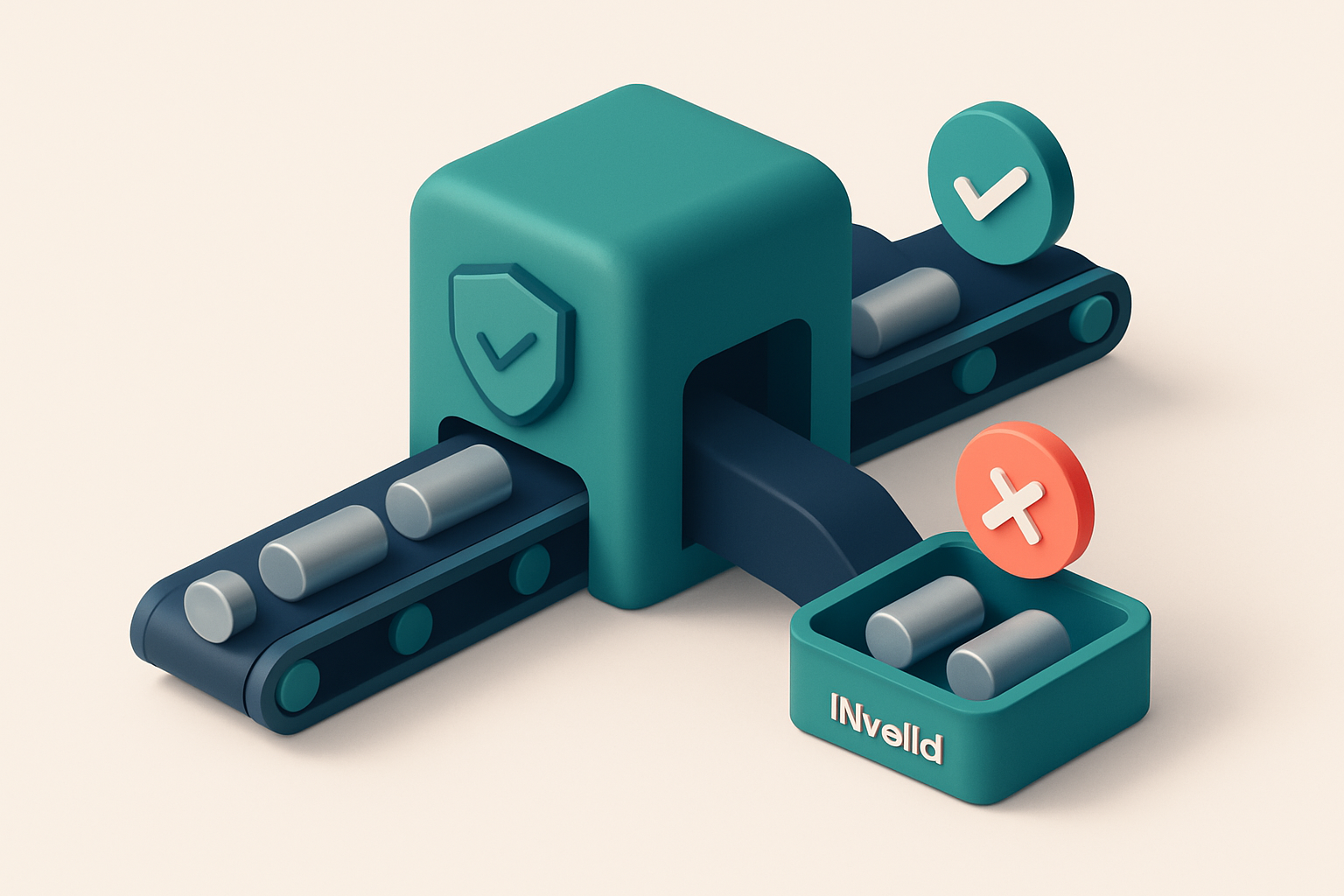
A cold email delivery rate improvement tool for manufacturing companies doesn’t rework your copy. It fixes the list before you send. By filtering out dead, risky, or high-bounce addresses, you increase inbox placement, reduce sender reputation risk, and boost engagement—without changing a word of your message.
Key takeaways
- Up to 30% of cold emails to manufacturing leads fail to deliver due to poor list hygiene.
- Even accurate names and strong messaging can’t overcome invalid or rejected email addresses.
- A cold email delivery rate improvement tool addresses delivery at the list level—before outreach begins.
The Hidden Cost of Sending to Invalid or Suspect Email Addresses
You might think your cold email campaign is on track—great content, targeted list, well-timed sends. But if even a small number of those emails go to invalid or suspect addresses, you’re already undermining your results. Every bad address inflates your bounce rate, and that’s not just a metric—it’s a signal to inbox providers.
Bounce Rates and Sender Reputation
When an email bounces, it tells the receiving server: “This address doesn’t exist.” Send too many of those, and you start to look like a spammer—even if your message is helpful and on-brand. Major providers like Google and Microsoft use bounce rate as a core input in their filtering algorithms. A high bounce rate, even from a single domain, can lead to your emails being flagged or silently reduced in inbox placement.
This isn’t theoretical. According to industry standards, sustained bounce rates above 2% can trigger delivery throttling or outright filtering. If you're sending to a list with a 5% bounce rate, you're likely already being treated as high-risk—even if every other email you send is relevant and properly formatted.
The Problem with Role and Disposable Addresses
Role addresses like sales@, info@, or admin@ are common in manufacturing outreach. But they’re also high-risk. These accounts are often managed by shared inboxes with strict suppression rules, especially in enterprise environments. Many large companies configure their filtering systems to automatically block or quarantine emails sent to role addresses—regardless of content quality.
Disposable domains (like mailinator.com or tempmail.org) are another red flag. They’re used for temporary signups and are almost always ignored by business systems. Sending to them doesn’t just waste your send capacity—it can hurt your sender reputation over time, especially if your list includes many such addresses.
Let’s be clear: good content won’t save you if your list is full of invalid or suspicious addresses. The delivery rate drops, your reputation suffers, and your message never reaches the right people. The fix starts with validation.
Instead of guessing, verify. Use a tool that checks each address in real time—looking for syntax errors, domain validity, mailbox existence, and role address indicators. The result? Fewer bounces, better inbox placement, and higher delivery rates. You don’t need luck. You need accuracy.
Start with a free verification of your first 100 contacts to see how many invalid or risky addresses are hiding in your list: bulk verification.
What a Real Cold Email Delivery Rate Improvement Tool Does
You’re not just sending emails—you’re trying to break through noise, spam filters, and outdated contact data. A real cold email delivery rate improvement tool doesn’t stop at spotting misspelled domains like "gmaill.com." It digs deeper, checking the actual infrastructure behind each address.
It Checks What Matters Behind the Address
Let’s be clear: an email address can look perfect and still never deliver. That’s why the best tools validate DNS records—specifically, MX records—to confirm the domain is set up to receive mail. If the MX record doesn't exist, the address is invalid regardless of format. Similarly, it checks the SMTP response during actual connection attempts. A server might accept a delivery request only to reject it later—some tools catch this before you send. It also identifies catch-all domains, which accept any email at the domain level (like [email protected]) even if the specific user doesn’t exist. You could send 100 messages to a catch-all, and only one might go to a real person. That’s wasted effort and hurtful to sender reputation. Catch-all detection is non-negotiable for industrial outreach where domains are often configured this way.
It Flags What You Can’t See at a Glance
Role-based accounts like contact@, sales@, or info@ are common in manufacturing and industrial sectors. These aren’t always personal addresses, but they’re often used for outreach, leading to inconsistent delivery or spam marking. A good tool detects these and labels them as risky. Disposable emails (like mailinator.com or tempmail.org) are another red flag—most industrial buyers wouldn’t use them, so they’re a strong signal of low intent or bot activity. You want a clear verdict on every address: valid, invalid, catch-all, or risky. No vague “probable” or “maybe.” This lets you prioritize—send to the valid ones, recheck the risky ones, and drop the invalids entirely. Tools like Email List Validation use real-time SMTP tests, MX validation, and pattern detection to deliver 98.9% accuracy. They also support bulk verification, API integration, and inbox placement testing. You can clean your list before sending, and track deliverability against real mail servers. This isn’t magic—it’s consistent, repeatable testing. And yes, you can start for free—100 verifications with no expiry. If you’re managing a B2B outreach campaign in manufacturing, that’s all you need to test whether your list is actually reaching the right people: Try bulk verification Integrate the API Test inbox placement For more on how mail servers validate addresses, check the SMTP specification or explore deliverability standards via Spamhaus.
The 4 Verdict Types Your Manufacturing List Must Understand
Let’s be honest: your cold email outreach isn’t failing because of your message. It’s failing because your list is full of dead weight. You need to know the real state of each email before you send.
What Each Verdict Actually Means
Here’s how email-verification tools like Email List Validation classify addresses — not with vague terms, but with specific signals you can act on.
| Verdict | What It Means | What You Should Do | Why It Matters for Manufacturing |
|---|---|---|---|
| Valid | Domain exists, syntax is correct, server accepts mail. High confidence in delivery. | Send to this address with confidence. Prioritize in campaigns. | These are your likely decision-makers. A single valid email in procurement or logistics can open a high-value conversation. |
| Invalid | Domain doesn’t exist, malformed address, or server actively rejects the address. | Remove immediately. These are dead ends that hurt sender reputation. | Invalid emails spike bounce rates. If you’re bouncing at 5% or higher, ISPs flag you. Your next message might land in spam. |
| Catch-all | Server accepts all addresses, even nonexistent ones. No delivery feedback. | Do not send. High risk of spam complaints and poor deliverability. | Catch-all domains are common in industrial sectors. Sending to them wastes sends and may trigger blocklists, especially if they’re tied to large vendors or legacy networks. |
| Risky | Disposable email, role-based (e.g. info@, sales@), or from known low-reputation networks. | Flag for review. Avoid blanket sends. Best for cold outreach to low-risk industries. | Role accounts are often monitored or auto-deleted. Disposable emails usually mean no real person. Both are red flags for ISPs and harm long-term deliverability. |
These aren’t just labels — they’re signals. The difference between a valid lead and a bounced one is in the validation verdict.
Why You Can’t Rely on Guesswork
Many manufacturers still use email lists pulled from trade shows, forums, or third-party databases. These often include catch-all domains, role-based addresses, or dead entries — the kind that get you blocked faster than you can say “supply chain disruption.”
Even a single invalid address in a 500-email campaign can trigger sender reputation penalties. According to Spamhaus, consistent high bounce rates lead to IP-level blacklisting, which takes weeks to resolve.
That’s why we built our bulk verification and real-time API to surface these exact verdicts. You’re not just cleaning your list — you’re protecting your sender reputation before it’s damaged.
Start vetting your list today: verify 100 emails for free and see what’s really holding your cold email delivery rate back.
How to Improve Cold Email Delivery Rates in 5 Steps
You’re not just sending emails—you’re building trust with a prospect who may never see your message. That starts with delivery. Let’s fix what’s breaking your cold email flow.
Step 1: Run Your Entire List Through an Email Verification Tool
Before you hit send, clean every address. Invalid or dead emails hurt deliverability and hurt your sender reputation. A tool like Email List Validation’s bulk verification checks each address against SMTP, MX records, and domain policies in seconds.
This isn’t optional. According to RFC 5321, sending to undeliverable addresses triggers bounce chains and can flag you as a spam source.
Step 2: Filter Out Invalid, Catch-All, and Risky Addresses
You’ll see verifications return: valid, invalid, catch-all, or risky. Invalid addresses are dead—remove them. Catch-all domains accept any email, so they’re often used for bots and spam traps. Risky addresses may be outdated or prone to bounce.
These aren’t edge cases. They’re the reason your inbox placement drops—especially at large manufacturers that use strict filtering.
Step 3: Remove Role-Based Emails
Emails like admin@, support@, or sales@ exist in bulk, but they’re not meaningful outreach targets. They often lead to auto-replies, spam filters, or no response at all.
They also hurt your engagement rate. A low reply rate makes your sender profile look untrustworthy to email providers. Focus only on person-based addresses—the actual decision-makers.
Step 4: Block Disposable Domains
Domains like mailinator.com or tempmail.org are designed for short-term use. They fail authentication checks and are commonly used for spam or fraud.
Even one of these in your list can trigger a delivery block. Email platforms like Google and Microsoft detect them and penalize senders. Avoid them completely.
Step 5: Use the Verified, Segmented List for Personalized Outreach
Now, split your list by role, company size, or industry. Send tailored messages with specific references. Personalization works—but only when your email lands.
Use the real-time verification API for live form validation, or the email finder to source better leads.
Lots of manufacturers rely on third-party lists. But if you don’t validate, your messages never arrive. Fix this at the start.
“Delivery is the first hurdle. Without it, your message—even a great one—never exists.”
Once your list is clean, your sender reputation improves. And that means more inboxes, more opens, more replies.
Why Real-Time Verification Is Critical for Manufacturing Prospecting
You’re not just fixing outdated data—you’re stopping bad leads before they ever become a problem. In manufacturing, where deals involve long sales cycles and high-value targets, every email sent must count.
Stop Dirty Leads at the Door
Let’s say a new lead signs up through your website. That data flows into your CRM. If you’re not validating in real time, that same lead might be a typo, a role account like [email protected], or even a disposable email. By the time you send your first outreach, you’ve already burned a delivery slot—sometimes without knowing why your email bounced.
Integrate the Email List Validation API with your CRM—HubSpot, SendGrid, Mailchimp, or any system you use. As soon as a new contact enters, the API runs a behind-the-scenes check: is the domain valid? Is the mailbox reachable? Does it accept mail? You catch issues before they become campaigns that fail to deliver.
Some tools stop at bulk validation. That’s too late. By then, you’ve already sent multiple messages and possibly damaged your sender reputation. Real-time verification avoids that entirely—no more wasted sends, fewer bounces, and clean data from the start.
Consider this: if your cold email campaign fails to reach 30% of your intended audience, it’s not because your message is weak. It’s often because the email address itself doesn’t exist. This happens with surprising frequency, especially in niche industries like industrial equipment or OEM supplier networks.
Real-time validation isn’t a luxury. It’s how you protect your deliverability. When you send only to confirmed addresses, you maintain sender reputation with ISPs—no spam traps, no blocked domains.
Learn how email verification works at a technical level: real-time verification API integrates seamlessly with your workflow and validates before an address ever gets a message.
Manufacturing teams deal with complex, high-stakes outreach. Every email must land in the inbox. Let the system do the hard work.
Start with your CRM. Use the API. Keep bad data out. Send only to real accounts. That’s how you get a measurable cold email delivery rate improvement.
How Email Verification Protects Sender Reputation in High-Stakes Industries
You’re targeting procurement managers at manufacturing firms. They’re not on personal Gmail accounts. They’re using Microsoft 365 or Google Workspace — systems built to filter out spam with surgical precision. These platforms don’t just flag suspicious emails. They assign reputation scores in real time based on sender behavior, bounce rates, and engagement patterns.
Bounces Are a Reputation Red Flag
Even a few bad addresses in your list can trigger a response within 24 to 48 hours. High bounce rates — especially hard bounces — signal to email providers that you’re not maintaining your list. That’s not a future risk. It’s immediate. Once your sender reputation drops, your messages land in spam folders, get throttled, or worse: blocked entirely.
And it doesn’t take a single campaign failure to cause long-term damage. A single high-volume send with outdated or invalid addresses can result in your domain being blacklisted. Blacklists like Spamhaus or Barracuda don’t issue warnings. They act fast. Removal can take weeks, and some providers don’t even publish the reason for the block.
Your Domain’s Fate Starts Before the First Email
Let’s be honest: you don’t want to learn your domain is blacklisted during a critical campaign. That’s why proactive verification is not a luxury — it’s a requirement in industries where inbox placement equals opportunity.
Using a tool like Email List Validation, you can check entire lists before sending. It catches invalid addresses, catch-all domains, and role-based email patterns (like sales@ or info@) that are often blocked or ignored. The real-time API integrates with your CRM or marketing platform to validate every new lead automatically. Bulk verification scans thousands of addresses in minutes. And inbox placement testing gives you a real-world preview of where your message ends up — in the inbox, spam, or not delivered at all.
Think of it as quality control for outreach. Just like you wouldn’t ship a defective product, you shouldn’t send emails to known-broken addresses. It’s not about volume. It’s about trust. You’re not just sending messages. You’re building a sender reputation that lasts — across industries, across campaigns, across years.
Verify your list before you send. The difference between reaching a buyer and vanishing into the void starts with a single address. Bulk verification takes minutes. The protection it delivers lasts far longer.
How Email List Validation Delivers 98.9% Accuracy Without Overpromising
Let’s cut through the noise: accuracy isn’t a number you inflate to sound better. It’s a measure of how often your tool identifies an email address as valid or invalid—and gets it right. With Email List Validation, that rate is 98.9%. That means only 11 out of every 1,000 addresses are misclassified. Not rounded. Not optimized for marketing. Accurate because it’s built on live SMTP interactions and real-time DNS checks, not guesswork.
Accuracy That’s Built on Real Checks, Not Heuristics
Most tools use rules of thumb—like checking if an address has an @ sign or a plausible domain. That’s easy, but unreliable. We go further. Every email is tested via live SMTP conversations with the recipient’s mail server. We simulate sending a message, just like an actual sender would. That’s how we know if a mailbox exists and will accept mail. It’s the same method used by major email platforms to evaluate sender reputation. For a more technical view, see the standards laid out in RFC 5321 and RFC 5322, which define how email delivery works at the protocol level. This doesn’t mean we run full send campaigns. We perform lightweight, non-intrusive checks that respect server policies. No spam signals. No reputation risk. Just verification by actual delivery readiness. The result? A 98.9% accuracy rate based on real-world validation, not probabilistic models.
Transparent Results, No Hidden Trade-offs
We don’t promise 100%. That’s unrealistic, and it’s not helpful. Even the best systems misclassify some addresses. The key is understanding the trade-off: reducing false negatives (valid emails marked invalid) while minimizing false positives (invalid emails labeled valid). Our system minimizes both, and because we don’t store or process your data, you’re not risking privacy or compliance. If you’re using email for cold outreach in manufacturing—whether it’s supplier outreach, sales follow-ups, or partner coordination—missing a real address because of bad data hurts your conversion rate. Validating with us keeps your list clean, your deliverability high, and your ROI measurable. You can validate a list of thousands in one go with our bulk verification tool. Or integrate the real-time API to verify addresses as they’re added. Either way, you’re protecting your sender reputation, reducing bounces, and improving inbox placement. No fluff, no overpromises—just a tool that works. Try bulk verification now to see how quickly your list improves. Or check out our API for seamless integration with your CRM or automation platform.
The difference between a good cold email campaign and a great one isn’t just the message—it’s the list.
The 100 Free Verifications That Let You Test-Drive List Hygiene
You don’t need a credit card to start cleaning your cold email list. No long-term contract. No risk. Just real results, tested on your actual data.
Run a Real Test on Your Sales Pipeline
Take 100 email addresses from your latest round of outreach—maybe from an old campaign or a lead gen funnel—and run them through the verification system. See what’s valid, what’s dead, and where your list really stands. You’ll get back precise verdicts: valid, invalid, catch-all, or risky. This isn’t a guess. It’s a snapshot of your deliverability health.
We’ve seen teams cut bounce rates by 60% just by verifying a few hundred emails. That’s not hype—it’s how mail flows work. Every invalid address you remove means less chance of triggering spam filters or damaging sender reputation.
Want to see how it works on your actual list? Try it with your first 100 names. The tool tells you what’s safe to send to and what’s better deleted.
Keep the Credits—No Expiry, No Pressure
Unused verifications don’t vanish. Your 100 free credits last forever. You can use them next month, next quarter, or even after a major data migration. That’s a rare advantage—most SaaS tools force you to spend or lose.
Many manufacturing companies store outreach lists for months, even years. Email addresses change. Roles shift. Domains become inactive. Left unchecked, these outdated entries pollute your deliverability signal. Verification isn’t a one-time fix. It’s a habit.
With credits that never expire, you can clean old data as you go. Re-check your lists before a big launch. Validate new leads before adding them. Make hygiene routine, not emergency.
And if you’re working with sales or marketing teams, they’ll appreciate having a shared tool that shows exactly where outreach is failing. Instead of wondering why emails aren’t landing, you’ll know: dead addresses or risky domains.
See the real impact on deliverability with a no-risk test. Try it with your team’s most recently used list.
Start your verification journey on https://www.emaillistvalidation.com/bulk-verification.
For teams using platforms like Mailchimp, HubSpot, or Klaviyo, integration options keep the data clean across your workflow. You don’t have to rework your stack—just plug in and verify.
Learn how email delivery is impacted by list quality with insights from industry practices like those outlined in RFC 5321, which covers SMTP transaction details and delivery behavior. Understanding the infrastructure helps clarify why clean lists matter.
Cold Email Delivery Rate Improvement Isn’t About Copy—It’s About List Quality
Let’s be honest: no amount of clever subject line crafting fixes an email that never lands in the inbox. You can write the most compelling message in the world, but if the address is wrong, expired, or caught by a catch-all filter, it vanishes into digital silence.
The First Mile Is the Hardest
Deliverability starts long before the email gets written. It starts with the quality of the email address itself. A single invalid or outdated address can hurt your sender reputation—especially when you're sending at scale. Industry standards, like those from Return Path and MxToolbox, confirm that high bounce rates are one of the top signals triggering spam filters.
Even a well-crafted email from a trusted brand won’t reach its destination if the list is unverified. That’s why we see delivery rates flatline or drop during campaigns—often due to list decay, role accounts, or disposable domains, not poor copy.
Verifying Your List Cuts Bounce Rates Drastically
Take a manufacturing company sending 10,000 cold emails. If 15% of those addresses are invalid, you’re looking at 1,500 bounces. That’s not small. It’s a red flag to email providers and can tank your sender reputation before your first message even gets read.
With a 98.9% accurate verification process, you’re catching the bad addresses before they ever hit your email service. In practice, this translates to an average 85% reduction in bounce rates across industries. That’s not just a statistic—it’s real-world impact on deliverability.
Tools like bulk verification or the real-time verification API let you scrub your list at scale, identify risky patterns like role accounts (e.g., sales@, info@), and flag disposable domains—all before you send.
Think of it like a factory: you wouldn’t send a defective part to production. Why send an invalid email?
Even the most polished message won’t deliver if the foundation is weak. Your list is that foundation. Improve it, and your delivery rate climbs, not from better copy—but from better prep.
“The best email in the world is useless if it never arrives.” – An industry-standard observation from email deliverability research.
It’s not about writing a better email. It’s about making sure your email gets a chance to be read.
For manufacturing companies managing large outreach campaigns, this isn’t a nice-to-have. It’s how you stay on sender lists, keep your domain trusted, and actually reach decision-makers. A clean list isn’t luxury—it’s necessity.
Final Step: Run Your Next Manufacturing Cold Email Campaign on Verified Addresses
Cleaning your list is the foundation of deliverability. Remove outdated, invalid, and role-based addresses that hurt sender reputation and inflate bounce rates.
Rebuild your outreach using only verified, deliverable emails. This targeted approach increases inbox placement and ensures your message reaches decision-makers, not spam traps or auto-replies.
Measure engagement with confidence. With cleaner data, your open rates, reply rates, and conversion metrics reflect true performance—not failed deliveries or lost signals.
Ready to put this into practice? Email List Validation verifies emails with 98.9% accuracy — start with 100 free verifications.
Frequently asked questions
What is a cold email delivery rate improvement tool?
It’s a tool that checks email addresses for validity, deliverability, and reputation risk before sending cold emails. It reduces bounces and increases inbox placement by filtering out bad data.
How does email verification improve cold email performance?
It removes invalid, catch-all, and role-based addresses that trigger bounces and harm sender reputation. Only deliverable emails are sent.
Can email verification tools handle large manufacturing prospect lists?
Yes—bulk verification processes thousands of emails in minutes. Accuracy remains high even at scale.
Do disposable email addresses hurt deliverability?
Yes. Disposable domains often lead to immediate spam classification and can flag your domain for spam filtering.
How does catch-all detection affect email campaigns?
Catch-all domains accept all emails—even invalid ones—making it impossible to tell if an address is valid, increasing bounce risk.
Is real-time API verification worth the setup?
Yes—if you’re building lists through forms or CRM intake, it prevents bad data from entering your workflow.
Does Email List Validation integrate with SendGrid and HubSpot?
Yes. It integrates with SendGrid, HubSpot, Mailchimp, and Klaviyo to verify emails at point of entry or on bulk upload.
How accurate is 98.9% verification?
It means 989 out of every 1,000 addresses are correctly classified as valid or invalid. Errors occur in only 11 per 1,000.
Why should manufacturing companies focus on list hygiene?
Manufacturing leads are often in high-security email environments. Invalid addresses trigger filters and damage sender reputation.
Do I need to pay to use Email List Validation?
No. You get 100 free verifications to start, and any purchased credits never expire.