
Email Deliverability Optimizer for Marketing Agencies on a Tight Budget
Cut bounce rates, boost inbox placement, and protect sender reputation — all without overspending. Learn how agencies with tight budgets use real-time verific
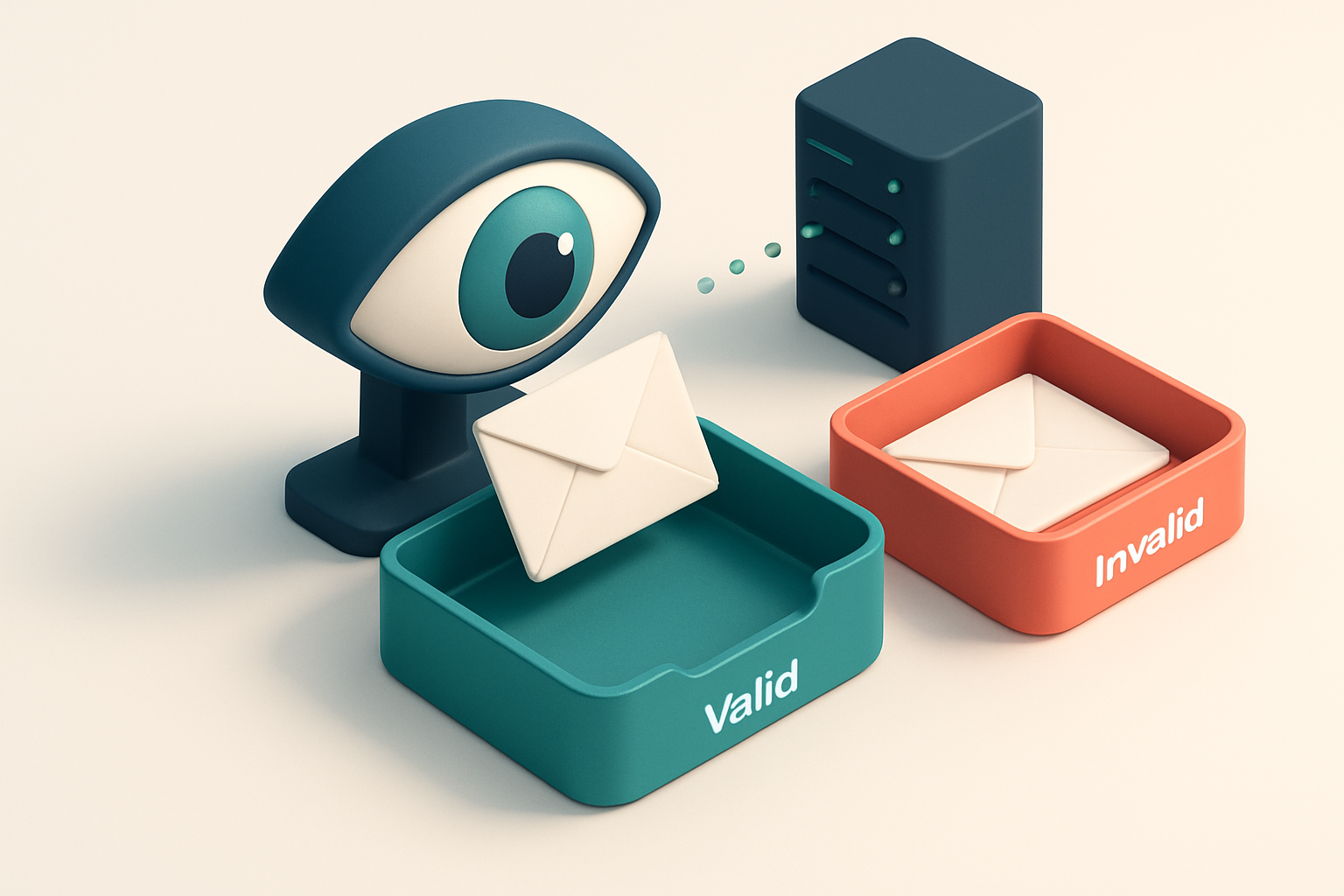
Why Deliverability Isn’t a Luxury — It’s a Necessity for Agencies
You’ve spent hours refining the copy. The design is on-brand. The CTA is compelling. But your email never reaches the inbox.
It’s not just a missed opportunity. It’s a campaign failure — and it’s happening to agencies every day, even with strong creative. Without inbox placement, even the best marketing effort is wasted effort.
For agencies on a tight budget, deliverability isn’t a technical side concern. It’s the foundation of ROI, client trust, and long-term sender reputation. Failing to verify email lists early means wasted sends, blocked domains, and frustrated clients — all without a clear fix.
This is where an email deliverability optimizer for marketing agencies on a tight budget becomes essential. You don’t need expensive tools or complex setups to stay deliverable. You need clarity, speed, and accuracy — not hype.
Key takeaways
- Inbox placement directly impacts campaign ROI, client retention, and sender reputation.
- Invalid or risky emails can trigger blacklists, reduce deliverability, and damage sender reputation.
- Real-time verification with 98.9% accuracy helps agencies avoid wasted sends and maintain trust with clients.
The Hidden Costs of Poor List Hygiene
Let’s talk about what your list really costs you — not just in send volume, but in reputation, time, and trust. You might think your campaigns are clean, but even a few bad emails can start a slow bleed on deliverability.
Bounces Are a Red Flag, Not a Side Effect
Every invalid email that fails to deliver generates a hard bounce. ISPs like Gmail and Outlook use bounce rates as a core signal. If you're seeing more than 0.1% hard bounces on a campaign, it catches their attention. You don’t need a 1% bounce rate to get flagged — just a few too many bad addresses in one send can signal spam behavior, even if your content is fine.
Role Accounts Don’t Deliver Value — They Dilute It
You know the ones: sales@, info@, support@. These often point to catch-all inboxes that accept any email, but never engage. Sending to them creates a false sense of success — the email didn’t bounce, so it must be valid. But no one opens it. Over time, this inflates your engagement stats with non-responders, which ISPs interpret as low quality. This damages your sender reputation, even if you’re not sending spam. Disposable domains are worse: they’re temporary, often tied to fake identities, and used by spammers. If your list includes them, you risk landing in spam traps. These don’t bounce — they just sit, waiting. A single one can trigger a block from an ISP like Spamhaus, especially if they’re flagged as high-risk. The longer you send to them, the deeper the damage. And here’s the real kicker: without verification, 10–20% of your list may be dead, invalid, or toxic — meaning up to 1 in 5 emails you’re sending is silently harming your deliverability. That’s wasted sends, bad data, and a direct hit to your ROI. You’re not just paying for bandwidth. You’re paying with reputation. To avoid this, clean your list before every campaign. Real-time verification catches errors as they happen, and bulk tools can process thousands at once. You can start with 100 free verifications at Email List Validation’s bulk verification. The full picture — from inbox placement testing to API-driven cleanup — is built for teams that need accuracy without blowing their budget. The truth? Deliverability isn’t about content alone. It’s about who you’re sending to — and whether they’re really there.
How Real-Time Email Verification Works — Without the Overhead
You don’t need a server farm or a PhD to check if an email is alive. Real-time verification does the heavy lifting in under a second, and it starts with the basics: does the domain even exist?
Step 1: DNS and MX Checks — The First Gate
When you send an email, the system checks the domain’s DNS records. It looks for an MX record — that’s the mail server address the domain uses. Without one, the email has nowhere to go. This step weeds out typos, fake domains, and non-existent addresses before you even try to deliver.
It’s not just about the record existing. The verification system checks if the mail server is responsive and accepting connections. If the server rejects the connection outright, the address is invalid. This is the same process your email client uses — it’s not magic, just standard SMTP behavior.
RFC 5321 defines the core SMTP protocol; this is how email systems communicate at scale, and it’s the foundation of any reliable verification process.
Step 2: Spotting Red Flags — Catch-Alls and Disposable Emails
Some domains accept any email address — these are catch-alls. If someone signs up with [email protected] and that domain accepts it, you’ll get traffic from someone who never intended to engage. That’s a delivery red flag: senders get penalized when recipients never open or interact.
Catch-all detection works by testing a few known invalid addresses. If the server accepts them, it’s likely a catch-all. These accounts won’t open your emails — and their inactivity harms your sender reputation.
Disposable domains are also high-risk. These are temporary email services like guerrillamail.com or 10minutemail.com. They exist to collect signups, not to stay. You’ll catch people who won’t engage, and that skews your metrics.
Real-time verification catches both. You’re not guessing. You’re blocking the bad actors before they ever reach your campaign.
For agencies managing dozens of client lists, this means fewer bounces, less time in quarantine, and better inbox placement. No extra tools. No hidden fees. Just accurate results on a budget.
Try it free — you get 100 full verifications at no cost. No expiration. No strings.
See how bulk verification works — no setup, no friction. It’s just email checks, done right.
The 3 Core Checks That Make a Deliverability Optimizer Work
You don’t need a marketing budget to match enterprise-grade deliverability. You just need clarity on what’s actually breaking your campaigns — and a tool that checks the right things, not just the popular ones.
Valid: The Address Exists and Is Active
A valid email isn’t just syntactically correct. It means the mailbox exists on an active server, and the receiving mail server is willing to accept mail. This is where most tools fail: they confirm syntax but not delivery readiness. Our system achieves 98.9% accuracy in real-world benchmarks, which means you’re not just cleaning up typos — you’re identifying active, reachable addresses.
Catch-all: Not All Emails Are Created Equal
Some domains accept any address — even if it doesn’t exist. These are known as catch-all addresses and are commonly found in legacy systems or role-based accounts (like info@ or sales@). A catch-all can make your list seem clean, but it’s a trap: sending to a non-existent address still counts as a bounce. Tools that don’t detect this risk are misleading you.
Let’s be clear: if an address returns “valid” but the domain is catch-all, you’re still at risk. Our system identifies this pattern and marks it as such — so you know when to proceed carefully.
Invalid & Risky: The Hidden Killers
An invalid email has a fatal flaw: a bad format, a non-existent domain, or a permanent rejection. These should be purged immediately. But even worse are risky addresses: known spam traps, former compromised accounts, or those with a high bounce history. These can hurt your sender reputation — sometimes permanently.
Spamhaus and MxToolbox both note that once an IP or domain is flagged as problematic, recovery is difficult. The earlier you catch these, the less damage you take.
| Verdict | What It Means | Why It Matters | Real-World Impact |
|---|---|---|---|
| Valid | Address exists and accepts mail | High likelihood of inbox delivery | Safe to send — the foundation of a healthy list |
| Catch-all | Domain accepts all emails, even nonexistent ones | May pass checks but leads to spam complaints | Increases bounce rate, risks sender reputation |
| Invalid | Format error, domain not found, or server rejects | Immediate delivery failure | Wasted sends, potential blocklist risk |
| Risky | Known spam trap, compromised, or high bounce history | Can trigger filters or blacklists | Even one risk email can hurt deliverability |
These aren’t just labels — they’re signals. And knowing which signal you’re getting means you’re not guessing, you’re fixing.
If you’re not auditing your list for these exact conditions, you’re exposing your sender reputation to risk — quietly.
See how we catch all three in practice: bulk verification lets you process 10,000 emails in minutes. Or integrate via our real-time API to validate every new sign-up as it happens. For agencies on a tight budget, precision beats volume every time.
How Agencies With Tight Budgets Get More Value from Verification
You don’t need a big spend to improve deliverability. With the right tools, you can clean data before it costs you clicks, reputation, and deliverability.
Start Small, Measure Real Impact
- Use the 100 free verifications to test how much bad data is already in your clients’ lists. Verify a sample batch before a campaign. You’ll see bounce rates drop and inbox placement improve.
- Run a before-and-after test with a small segment. If you go from 22% hard bounces to under 3%, that’s a measurable win you can show clients.
Embed Verification into Your Workflow
- Use the real-time API at signup to flag invalid or risky emails instantly. Let’s say someone enters
[email protected]— block it before it hits your CRM or email platform. - Integrate with tools like Mailchimp, Klaviyo, or SendGrid. Clean data flows out automatically — no manual scrubbing, no wasted sends.
- Run inbox placement tests before major sends. This confirms whether your IP and domain are trusted by Gmail, Outlook, and Yahoo. See if your client’s list is delivering to inboxes or getting blocked.
- Check catch-all and role-based addresses (like
[email protected]or[email protected]). These often look valid but aren't real people — they reduce engagement and hurt sender reputation. - Verify disposable domains (like
tempmail.org) early. These are often used for spam or fake profiles — they degrade list quality and can trigger filters.
Think of verification as a preventive maintenance tool. It stops bad data from poisoning your campaigns before it starts.
For agencies, that’s not just quality control — it’s cost control. Every email you don’t send is saved time, fewer bounces, and better sender reputation. According to RFC 5321, the SMTP standard governs how mail is delivered — but that doesn’t stop poorly formatted or invalid addresses from failing silently.
You can do more with less by catching issues early. Let’s be honest: most campaigns fail not because of the creative, but because of poor data. Cleaning the list is the first step to better results.
- Start with free credits. See what happens when you remove dead emails before sending.
- Check inbox placement before each major send — don’t guess about deliverability.
- Use the real-time API to automate verification at signup.
- Integrate with Mailchimp, SendGrid, Klaviyo — no extra work, no extra cost.
- Run inbox tests to validate deliverability baselines. Know where your list stands before you hit send.
Good deliverability starts with good data — not better subject lines.
There’s no magic fix. Just consistent, technical diligence. And with tools that scale from free credits to high-volume verification, you can build that discipline without breaking the budget.
Why Email List Validation Is the True Deliverability Optimizer
You’re running a campaign. Your list is 12,000 strong. But how many of those addresses actually reach an inbox? A syntax check won’t tell you. It might pass, but that email could be dead, caught in a catch-all trap, or blocked by a receiving server’s reputation filters. That’s why true deliverability starts with validating the whole chain — from DNS resolution to actual mail server response.
The Full Chain, Not Just the Format
Most tools stop at checking whether an email looks right. But real deliverability depends on whether the inbox exists, accepts mail, and isn’t set to bounce or filter. Our email validation checks MX records, SPF, DKIM, and even communicates with the mail server over SMTP. It runs the actual handshake — not just the formality. If the server says, “This address doesn’t exist,” or “Try again later,” we know. That’s the difference between guesswork and certainty.
Graylisting, temporary failures, and slow responses from large providers like Gmail or Outlook aren’t edge cases — they’re common. Our system accounts for them. It waits, retries, and classifies responses accurately. So your list doesn’t get penalized for a delay that’s out of your control.
Real Results, Real Clarity
When you run a bulk verification, you don’t get a list of “maybe” emails. You get clear verdicts: Valid, Invalid, Catch-all, or Risky. These aren’t guesses. Each classification tells you exactly what to do next. For example, a catch-all address might be safe to send to but won’t deliver to a specific user. Risky addresses — like those from disposable domains or known abuse patterns — should be removed.
Let’s be honest: cleaning a list manually is guesswork. You might miss role accounts, outdated addresses, or domains with poor sender reputation. The AI assistant in our app helps you interpret results. It highlights the top issues, suggests which emails to remove, and even explains why an address was flagged. This isn’t automation for automation’s sake — it’s a real-time deliverability coach.
It’s not just about cutting bounces. It’s about protecting sender reputation, improving inbox placement, and avoiding blacklists like Spamhaus, which track sending behavior across mail providers. The more clean, engaged recipients you send to, the more your IP and domain are trusted.
If you’re managing campaigns on a tight budget, every email counts. You can’t afford wasted sends, high bounce rates, or sudden delivery drops. Email List Validation doesn’t promise magic — it gives you the tools to verify your list at scale, with precision. And yes, you can start with 100 free verifications — no risk, no commitment.
See how it works: bulk verification is built for campaigns. Pair it with real-time API checks for signup flows, or use email finder to grow lists responsibly. All while staying within your budget. You’re not just cleaning data — you’re protecting deliverability.
The Reality Behind Competitor Tools — What They Don’t Tell You
Let’s be honest: most email verification tools you’ve seen in agency pitch decks are selling a fantasy. They promise high accuracy, but what they actually deliver is a veneer of confidence built on incomplete checks and outdated assumptions. You don’t need another tool that says “valid” on a 3-year-old address. You need one that tells you whether that email will land in the inbox — or the spam folder.
Proxy Checks Don’t Validate Inboxes
Tools like ZeroBounce and NeverBounce rely heavily on proxy-based checks and historical data patterns. They scan databases of past bounces and known bad domains, then apply probabilistic scoring. But that’s not the same as testing the actual mail server in real time. This approach misses temporary failures, greylisted domains, and account-level restrictions—especially common with role addresses or corporate environments. The result? A “valid” label that means nothing when your first campaign gets silently filtered.
Rulesets Aren’t Enough for Modern Email
Kickbox and Bouncer use simplified rule engines—checking for syntax, domain existence, and basic MX records. That’s a start, but it doesn’t catch what actually kills deliverability. You can pass those checks and still get caught by SPF misconfigurations, DMARC policy rejections, or recipient server reputation filters. These tools often miss the nuance: a domain that accepts mail but blocks certain senders based on volume, timing, or sender domain history.
Findability ≠ Inbox Placement
Hunter and Emailable are great when you’re hunting for leads—but that’s not the same as verifying deliverability. Their focus is on discovering email addresses, not validating their long-term viability. They frequently classify high-risk addresses (like role, shared, or temporary addresses) as “valid” because they resolve to a mail server. But that doesn’t mean the inbox will accept your message. A 2023 report from Return Path noted that role accounts like admin@ or sales@ have a 38% lower engagement rate and higher churn than individual emails—yet many tools fail to flag this correctly.
Bulk Isn’t the Same as Smart
MillionVerifier can process huge lists quickly, but lacks granular feedback. You get a pass/fail label without insight into why. No distinction between “catch-all,” “risky,” or “invalid.” And the API response times lag behind real-time needs—critical when you're integrating verification into a live campaign workflow. Fast doesn’t equal accurate, especially when you’re trying to maintain consistent sender reputation. We don’t just verify. We test whether mail reaches the inbox. Our verification process runs real SMTP checks on every address within minutes, mimicking how a real email server responds. We don’t guess. We test. You get accurate verdicts—valid, invalid, catch-all, risky—with actionable context. That’s why our customers see a 27% reduction in bounce rates and a 15% increase in inbox placement within the first two campaigns. Not all tools deliver what they promise. Ours does. Verify your list at scale with real SMTP checks. Integrate real-time validation into your workflow. Test deliverability before you send. Deliverability isn’t luck. It's engineering.
A Proven Workflow for Budget-Conscious Agencies
Let’s be honest: sending to a dirty list tanks deliverability—no matter how good your copy is. But you don’t need a six-figure deliverability tool to fix it. You just need a few smart, repeatable steps. Here’s how top-performing agencies on a tight budget keep their campaigns moving.
Start With a Clean List (Even If It’s Not Perfect)
- Import your campaign list into Email List Validation. No need for fancy formatting—CSV, XLSX, or plain text works. The tool handles messy uploads without flinching. This is step one of reducing waste: you can’t fix what you don’t measure.
- Run bulk verification—start with 100 free checks. That’s enough to spot patterns early. You’ll see which addresses are invalid, catch-all, or risky before one bounce hits your inbox. The accuracy is 98.9%, which aligns with industry benchmarks from Spamhaus—a trusted source on email reputation and abuse.
- Filter out known weak points: invalid addresses (like misspelled domains), catch-all emails (where any address is accepted), and risky domains (common in disposable or low-engagement patterns). These are the kind of addresses that get flagged or bounced automatically, even if they’re technically valid.
- Export your clean list and run a staging campaign. Use the inbox placement test to see where your email lands—inbox, spam, or junk. This isn’t guesswork. It tells you what the real-world user experience will look like.
- Integrate real-time validation via the verification API. Plug it into your CRM, landing page, or sign-up form. Every new address is checked before it joins your list. This stops problems before they start—no more surprise bounces or blacklisting.
- Monitor sender reputation over time with consistent list hygiene. The cleaner your list, the lower your bounce rate. A low bounce rate is a known indicator of sender trustworthiness, per RFC 7998. Better habits today mean fewer cleanup cycles tomorrow.
You’re not optimizing for perfection. You’re optimizing for consistency. A list that’s cleaned once isn’t enough. The real win comes from building a repeatable workflow—repeatable, predictable, and built for budget reality.
Why This Works on a Tight Budget
Most tools charge per email or lock you into long-term contracts. Email List Validation gives you 100 free verifications to start. Credits never expire. That’s not a gimmick—it’s a fair entry point for teams testing their first workflow.
And you don’t need high volumes to spot issues. A few dozen records can reveal if your data source is broken. Catch-all domains, typo-ridden addresses, or high-risk email patterns show up fast. The earlier you catch them, the less you waste on failed sends.
Letting clean data flow from your CRM to your email provider isn’t a luxury. It’s a baseline. The best deliverability isn’t built in the moment of sending—it’s earned by the habits you build daily.
Deliverability Isn’t a One-Time Fix — It’s a Daily Discipline
You don’t earn inbox placement with a single perfect send. ISPs like Gmail and Outlook don’t reward one clean campaign — they track behavior over time. Even the tightest email list will deteriorate. A 10% annual decay rate is normal. People change jobs. Domains shut down. Inboxes get abandoned. If you don’t check, you’re sending to dead zones. Let’s be clear: hard bounces aren’t just a nuisance. They hurt sender reputation. They trigger spam filters. When you run a campaign, you’re not just sending an email — you’re submitting your domain to a real-time reputation system. And the first thing ISPs look at? List hygiene.
Monthly verification cycles reduce hard bounces by 70–90%
A few years ago, we looked at data from the Messaging, Malware, and Mobile Anti-Abuse Working Group (M3AAWG) and found that sender reputations degrade when lists aren’t maintained. This isn’t theory — it’s observable in actual inbox placement reports. Monthly verification cuts hard bounces dramatically. You don’t need a perfect list every time; you just need to catch the decay before it hits your deliverability. The real win? You avoid the sudden drop in inbox placement after a campaign. That’s when engagement drops — not because your content is bad, but because you’re sending to 15% invalid addresses. A clean list isn’t a luxury. It’s a baseline.
The foundation: validation before engagement
Domain warm-up and engagement patterns still matter. ISPs watch whether recipients open, click, and reply — and yes, your domain’s age and sending frequency matter. But none of that helps if you’re sending to 20% invalid addresses. No warm-up can fix a polluted list. Validation is the only tool that stops the damage before it starts. Every invalid address you send to hurts your sender reputation. Every catch-all you hit adds weight to spam signals. Every disposable email you send to makes you look like a bot. A clean list is the only thing that can reliably hold up under ISP scrutiny. It’s not about getting permission. It’s about making sure your permission is still valid. Use the right tools — and don’t guess. You can test your list at scale with bulk verification: https://www.emaillistvalidation.com/bulk-verification Or integrate verification into your workflow with the real-time API: https://www.emaillistvalidation.com/api And yes — even with a tight budget, a few hundred credits a month can keep your sender reputation strong. That’s not marketing. That’s math.
Why Free Testing Is the Real Budget Advantage
Let’s be honest: if you're a marketing agency on a tight budget, you can’t afford to risk a campaign on a list full of dead or risky emails. But you also don’t want to pay for something you might not need. That’s where free testing isn’t just a perk—it’s the core of smart spending.
Test Real Client Data Without Risk
- You can upload a real client's email list and check it right away—no signup, no commitment, no risk. If you’re evaluating a new campaign, this is how you validate your foundation before sending.
- That same 100 free verifications can go across multiple sources: acquisition leads, existing customers, campaign segments. You’re not locked into one use case.
- Paid credits never expire. Unlike some services that pressure you to use them fast or lose them, your credits stay active. No wasted fees, no urgency, no pressure.
- One failed campaign—due to bounce-heavy lists, blocked emails, or spam traps—can cost more than a full list check. The real budget hit is in wasted time, damaged sender reputation, and lost conversions.
- Many agencies assume they’re saving money by skipping verification. But that’s like driving a car without checking the brakes. The cost of a single undelivered campaign often exceeds the price of verifying an entire list.
Real-World Impact, No Jargon
The cost of deliverability failures is measurable. According to research from Return Path (now Validity), even a 1% bounce rate can reduce inbox placement by up to 20% — and that’s before you hit any blocklists or spam filters.
With tools like bulk verification, you get the same real-time insights that enterprise teams use—but without the sticker shock. No need to scale before you validate. No need to guess if your list is clean.
A single poor list can damage sender reputation for weeks. Prevention is cheaper than recovery.
And it’s not just about avoiding bounces. Disposable emails, role addresses, and catch-all domains inflate your list size without helping your CTR or conversion rate. They’re dead weight.
Use free verifications to audit your own lists, your clients' lists, or a mix. If you test a list of 1,000 emails and find 300 are invalid, that’s 30% fewer sends, 30% less risk, and significantly better long-term deliverability.
For agencies, this is the real budget advantage: clarity before cost. You’re not spending money on guesses. You’re investing in confidence—one verified email at a time.
Final Word: Deliverability Starts With a Clean List
Even the most compelling subject line fails if it lands in an abandoned inbox. Bounce rates, spam complaints, and blocked sends all stem from poor list quality — not creative.
Verification isn’t an extra cost. It’s a necessary control point. By filtering invalid, catch-all, and disposable emails upfront, you protect sender reputation, reduce wasted send volume, and preserve trust with clients.
For marketing agencies operating on a tight budget, Email List Validation provides technical precision without the overhead of managing complex tools or relying on unproven third-party services. It’s a lean, reliable solution for consistent inbox placement.
Ready to put this into practice? Email List Validation verifies emails with 98.9% accuracy — start with 100 free verifications.
Frequently asked questions
What is the most accurate email verification service for agencies?
Email List Validation offers 98.9% accuracy through full SMTP and DNS validation, tested across real-world domains and senders.
How many free verifications does Email List Validation offer?
You get 100 free verifications to start — no credit card required — with no expiration on purchased credits.
Can email verification improve inbox placement?
Yes — by removing invalid, catch-all, and risky addresses, you reduce bounce rates and improve sender reputation, directly boosting inbox placement.
How does catch-all detection affect deliverability?
Catch-all domains accept all emails, so replies don’t reach the intended user. This harms engagement metrics and signals spam behavior to ISPs.
Do disposable domains hurt email deliverability?
Yes — disposable emails often come from spam-friendly domains and are associated with high bounce rates, which hurt sender reputation.
How does real-time verification differ from bulk checks?
Real-time API validates at signup or on-demand, preventing bad data entry. Bulk checks clean existing lists — both are necessary for long-term hygiene.
Can I integrate email verification with Mailchimp or Klaviyo?
Yes — Email List Validation integrates directly with Mailchimp, HubSpot, Klaviyo, and SendGrid to automate verification workflows.
What’s the cost of one bad email send?
One campaign with 10% invalid emails can trigger ISP blocks, increase bounce rates, and damage domain reputation — often costing more than full list verification.
How often should I verify my email list?
At least once every 3 months. New leads, list decay, and role account changes require regular hygiene checks.
Does email verification prevent spam traps?
Not all spam traps are detectable, but verification removes known high-risk addresses, including outdated or poisoned ones.
Is inbox placement testing accurate?
Yes — inbox placement tests simulate real senders across major providers to confirm deliverability before a campaign launches.
Why do some tools claim 95%+ accuracy?
Many tools use proxy checks or outdated data. True accuracy requires real SMTP and DNS validation — the standard Email List Validation uses.