
Email List Cleaning Service for Coaching Entrepreneurs
Remove invalid emails and improve deliverability with a trusted email list cleaning service tailored for coaching entrepreneurs. Start with 100 free verificatio
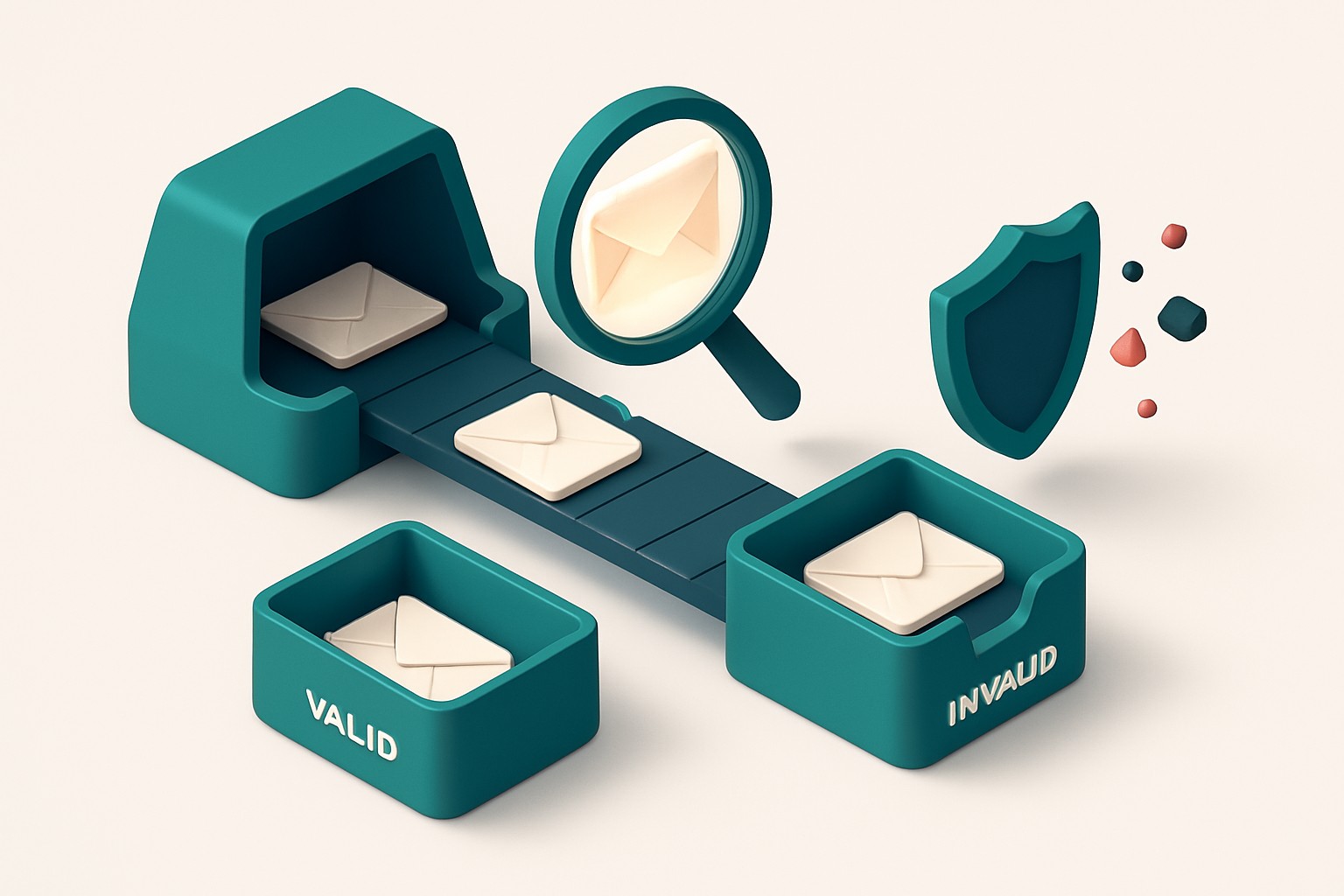
Why Your Coaching Email List Is Losing Value
You send a campaign to 5,000 subscribers. A handful bounce. You don’t think much of it—just a few bad addresses, right?
Wrong. One invalid email can trigger spam filters. One hard bounce can drop your inbox placement by 20% or more. And if you’re a coaching entrepreneur growing your list through free lead magnets, odds are you’ve collected hundreds of outdated addresses, role accounts, and disposable domains.
A list isn’t a list if it’s full of dead ends. Your email list cleaning service for coaching entrepreneurs doesn’t just delete fake addresses—it protects your sender reputation, improves deliverability, and turns wasted send volume into real results.
Key takeaways
- Even one hard bounce can reduce inbox delivery by 20% or more
- Role accounts (e.g. info@, admin@) and disposable domains don’t engage and harm sender reputation
- Fast list growth from free offers often includes a high rate of invalid or outdated email addresses
The Hidden Cost of Sending to Invalid Emails
You send an email. It bounces. No one sees it. And that’s not the end of it.
Each hard bounce — a permanent delivery failure — sends a signal to email providers. It says: “This sender doesn’t manage their list.” Providers like Gmail and Outlook use these signals over time to assess sender reputation. The more bounces, the lower your score gets.
High bounce rates risk your domain’s future
Even a small percentage of invalid emails can add up. A 5% bounce rate is a red flag. A 10%+ rate? That’s a fast track to being flagged as spam or outright blocked.
Blacklisting isn’t just about bad actors. Spam traps, inactive addresses, and outdated lists can trigger provider filters. Once your domain appears on a blocklist, recovery can take days, even weeks — and it can hurt your deliverability across all your campaigns.
Let’s be clear: you’re not just wasting a send. You’re weakening your ability to reach real clients. Every failed delivery erodes your sender reputation — the invisible metric that determines whether your emails land in the inbox or the junk folder.
It’s not just about numbers. It’s about trust. Email providers want to know you’re sending to people who want to receive your message. A high bounce rate breaks that trust.
And it’s not just about deliverability. Every message sent to an invalid address counts toward your sending limit. If you’re on a paid plan, that’s wasted credits. If you’re on a free plan, it’s harder to scale.
The right tool helps you catch these issues before they happen. Bulk list verification checks thousands of emails in minutes, flagging invalid, risky, and catch-all addresses. You’re not just cleaning your list — you’re protecting your domain’s reputation.
Think of it like maintenance. Just as you wouldn’t drive a car with a flat tire, you shouldn’t send to a list full of dead ends. The cost of ignoring it? Lost opportunities, blocked messages, and a damaged brand.
It’s never just about the bounce. It’s about what comes after — the long-term erosion of your ability to connect.
What’s in Your List? The Real Email Types That Harm Deliverability
Let’s cut through the noise: Not all emails are equal
You’re sending to a list. But what’s really on it? If you’re not filtering the bad from the just-barely-acceptable, your email health is already compromised. You can’t build trust if your messages go to accounts that aren’t even real. Let’s break down the email types that silently hurt your sender reputation and inbox placement.
- Role accounts like
admin@,sales@, orinfo@are common in coaching lists. But these aren’t real people. Most are auto-deleted or never read. Sending to them counts as wasted send — no engagement, no feedback, and nothing but a negative signal to mailbox providers. RFC 6531 defines how domains handle these, but real-world behavior shows they’re rarely used for meaningful communication. - Disposable email domains like
mailinator.comor10minutemail.comare designed to vanish. If your list includes these, you’re reaching users who won’t engage — and who don’t even want to be reached. Spamhaus regularly flags such domains as low-trust. - Catch-all addresses accept any incoming email, even if the specific address doesn’t exist. This creates a false sense of success — your send appears to go through, but no real user gets it. ISPs see this as a red flag. It signals that your list is poorly maintained and inflates your bounce rate.
- Malformed or invalid emails — say
user@domain.(missing TLD),[email protected], oremail@domainwith missing parts — trigger hard bounces. Each bounce harms your sender reputation. ISPs track your consistency, and repeated failures with the same domain are seen as a sign of poor hygiene.
Here’s what you can actually fix today
You’re not alone in this. Most coaching lists include at least one of these problem types — often without notice. Let’s be clear: you can’t improve deliverability by sending more emails to the wrong people. You need precision. Start by running a bulk verification on your list:
- Remove role-based addresses before sending.
- Filter out any email from disposable domains.
- Identify and drop catch-all entries before they inflate your bounce rate.
- Eliminate malformed addresses — they’re not just errors, they’re liabilities.
Use real verification tools to surface these issues. Email List Validation’s bulk verification checks for all these issues in one pass. It uses SMTP and DNS-level checks to confirm validity, catch-all status, and domain health — no assumptions, no guesswork. If you're integrating with your CRM or ESP (Mailchimp, HubSpot, Klaviyo), our API and integrations can validate every new signup in real time. Deliverability isn't about volume. It’s about quality, trust, and consistency. Clean your list. Send only to people who want to hear from you.
Cleaning Your List Isn't Optional—It's Standard Practice
Let’s cut through the noise: even if your list looks perfect, 20 to 30% of the addresses on it are likely inactive, misspelled, or dead. That’s not a worst-case scenario—it’s the industry standard. If you’re not cleaning your list before each campaign, you’re already behind.
Even Free Lead Magnets Contain Junk
You might think a lead magnet with 1,000 downloads means a clean, high-intent list. Not always. Free sign-ups from landing pages often include typos (like [email protected]), outdated emails, or even role addresses like [email protected]. Studies from email deliverability providers show that lists sourced this way can contain 15% or more invalid addresses—sometimes more. That’s not a small number. It’s a direct hit to your sender reputation.
Top Marketers Clean Before Every Send
Elite email marketers don’t just clean their lists once a year. They do it before every campaign, automated sequence, or newsletter. Why? Because every bounce—especially hard bounces—hurts your deliverability. ISPs like Gmail and Outlook track bounce rates closely. A list with even a few invalid addresses can trigger filtering or blacklisting.
Much of this is governed by real systems. SPF, DKIM, and DMARC are industry-standard email authentication protocols that help recipients verify you’re who you claim to be. But even with those in place, a dirty list still leads to poor inbox placement. According to data collected by Mail-Tester and third-party deliverability monitors, senders with high bounce rates see delivery drops of 15% to 25% compared to clean senders.
There are no shortcuts. You can’t rely on “good intent” or “high engagement” to compensate for invalid addresses. The system doesn’t care how passionate your message is—only whether the email reaches the inbox. And that starts with accuracy.
Use an email list cleaning service to flag invalid, catch-all, and risky addresses before you send. Tools like our bulk verification detect 98.9% of invalid emails with precision. They also identify role accounts and disposable domains—common red flags that signal low engagement or spam risk.
For ongoing campaigns, integrate our real-time verification API with your signup forms. Catch errors before they enter your list. You don’t need to guess if an email is valid—verify it instantly.
How Email List Validation Works: A Real-Time, 98.9% Accurate Process
What Happens Behind the Scenes
Let’s cut through the noise. When you run a list through Email List Validation, it’s not guessing. It’s verifying. Every address gets tested in real time by connecting directly to the recipient’s mail server using SMTP — the same protocol used by Gmail, Outlook, and every major email provider. You’re not relying on patterns or incomplete data. The system checks the full chain: domain existence, mailbox reachability, and whether the server will accept a message. This is how email deliverability actually works — and we mirror it exactly.
The Verification Process Step-by-Step
- Domain Check: We first confirm the email’s domain actually exists and has valid DNS records. A domain without MX records can’t receive mail — that’s a dead end.
- SMTP Connection: We establish a real-time connection with the recipient’s mail server. This isn't a simulation. It’s a live handshake at the protocol level.
- Mailbox Validation: We send a test command asking if the specific mailbox is valid. The server responds with a clear answer — yes, no, or something in between.
- Server Response Analysis: Based on the actual server return code, we classify the address. This isn’t heuristics. It’s a direct read of how the server would respond in a real send.
- Verdict Assignment: You get a precise result: valid, invalid, catch-all, or risky. Each verdict comes with a detailed reason — not a guess, not a label.
The results are transparent. If an address is catch-all, we tell you. If it’s a role account like support@ or sales@, we flag it. If a server rejects messages on a temporary basis, we mark it as risky. You're seeing what the server *actually* says — not assumptions. This is why our accuracy is 98.9%. It’s not a claim — it’s a measured outcome from real SMTP interactions across millions of emails. No guesswork. No data mining. Just server responses. We also track common red flags like disposable domains and known spam traps. These aren’t just listed; they’re ranked by risk level, so you know what to avoid. For those building outreach lists, the email finder lets you source real addresses with confidence. Need to test deliverability before sending? Try our inbox placement tool, which simulates real-world inboxes. All this works with your existing tools via our integrations with Mailchimp, HubSpot, Klaviyo, SendGrid, and more. If you're tired of sending to dead or risky emails — whether from a client list, a newsletter sign-up, or a cold outreach campaign — this process removes the uncertainty. It’s not magic. It’s engineering. Done right, it stops bounces before they happen. And unlike some tools that charge per send or time-limited access, our credits never expire. Start with 100 free verifications at our pricing page.
Why Bulk Verification Matters for Coaching Entrepreneurs
You’re building a high-impact coaching business. Your email list is your most valuable asset—yet it’s likely filled with dead or risky addresses. Cleaning 5,000 contacts by hand? That’s not just slow. It’s impractical.
Scale Without Sacrifice
Manual verification won’t scale. Even with a spreadsheet and a few hours, you’ll miss patterns: expired domains, role emails, misspelled addresses. Bulk verification processes thousands of emails in minutes with precise results—flagging invalid, catch-all, and risky addresses so you know what to keep.
Let’s be clear: sending to outdated or fake addresses damages your sender reputation. ISPs like Gmail and Outlook track engagement, and repeated bounces hurt your inbox placement. A single bad send can trigger filters. Bulk verification prevents that.
Stay Clean, Always
Verification isn’t a one-time task. New leads trickle in daily. You need a system that keeps your list healthy from the start.
That’s where the real-time API comes in. You can validate leads as they sign up—before they’re added to your funnel. It integrates with your CRM or signup form, automatically rejecting invalid addresses. This isn't just cleaner—it's safer for deliverability.
Mailchimp and HubSpot users are already doing this. You don’t have to wait for a quarterly cleanup. The API ensures every new subscriber meets basic inbox standards. It’s a simple layer of protection against accidental spam complaints or delivery failures.
The industry standard for email validation is built on SMTP and DNS checks—like checking if a mailbox exists and whether the server responds. These are technical, but reliable. That’s what our platform does at scale. You get results in under 10 seconds per address, with 98.9% accuracy across domains, roles, and new registrations.
The return on investment isn’t in vanity metrics. It’s in real sends reaching real people. Fewer bounces. Higher open rates. Stronger sender reputation. It’s not about being perfect—it’s about being predictable.
For coaches who rely on trust, consistency, and reach, a clean list isn’t optional. It’s the foundation of every campaign.
Process your full list in minutes and start sending with confidence.
Stay clean. Stay visible. Stay trusted.
The Best Email List Cleaning Service for Coaching Entrepreneurs
What You Need in a List Cleaner
Let’s be clear: not all email list cleaning services are built for coaching entrepreneurs. You’re not just sending newsletters — you’re building trust, guiding clients, and driving transformation. Your list matters. So your cleaning service must do more than just check syntax. Here’s what it should handle.
- Filter out role accounts like
info@,admin@, orsales@—they rarely engage and can hurt your sender reputation. - Remove disposable email domains (like Mailinator or Guerrilla Mail) that are used for spam or fake signups. These are dead ends and can trigger spam filters.
- Validate email syntax accurately — catching malformed addresses like
user@@domain.combefore they cause hard bounces. - Support bulk verification at scale. You might have hundreds or thousands of contacts. The service must process your entire list quickly, without timeouts or delays.
- Integrate directly with tools you already use: Mailchimp, HubSpot, Klaviyo, or SendGrid. No importing, no exporting, just clean data flowing in.
- Include a real inbox-placement test. You want to know if your message lands in the inbox, not the spam folder—before you blast the full list.
- Never store or view your list. Your data stays private. It’s processed in real time and discarded after verification.
Why It Matters for Coaches
Coaching entrepreneurs often build relationships through consistent, high-intent communication. Sending to thousands of invalid or low-quality addresses doesn’t just waste time—it damages your sender reputation. A poor reputation means fewer inboxes, lower engagement, and more blocked emails. The most effective cleaning tools use multiple verification layers: SMTP checks to confirm domain existence, mailbox probing to test if the address is actively receiving mail, and pattern detection for disposable or role-based addresses. Services like the one at Email List Validation apply these checks at scale. If you’re using HubSpot or Klaviyo, direct integration means you can clean your list without switching apps. That’s not a convenience—it’s a time saver. And when you’re ready to send, run a inbox-placement test to validate delivery performance across Gmail, Outlook, and other major providers. As documented by the Messaging, Malware, and Mobile Anti-Abuse Working Group (M3AAWG), consistent email hygiene improves deliverability and reduces the risk of being flagged as a spam source. That’s not just theory—it’s how email still works at scale. The goal isn’t just to reduce bounces. It’s to send only to people who are likely to read, engage, and convert. And that starts with a clean list.
Compare This: Real Capabilities, Not Hype
Let’s cut through the noise. You’re not just looking for a tool that says “valid” on a spreadsheet. You need to know which emails actually deliver — and why. Many so-called “list cleaning” services rely on outdated email databases or incomplete proxy checks. That’s like sorting apples by color instead of checking if they’re rotten. Email List Validation uses real SMTP connections to verify addresses by sending a test message to the recipient’s mail server, just as your actual campaign would. This means you’re not guessing — you’re checking the actual inbox.
What You’re Really Paying For
Some tools lock you into monthly subscriptions, charging you for access even if you don’t use the service. That’s money wasted. With Email List Validation, you pay only for verifications you use, and your credits never expire. Whether you clean 100 emails or 100,000, you’re not forced to spend just to keep access. It’s a model built for real business use — not vendor lock-in.
Scale, Flexibility, and Transparency
You don’t want to wait weeks to clean a growing list. Email List Validation gives you both bulk verification and a real-time API. Use the bulk tool for one-time cleanup: upload a CSV, get results in minutes. Integrate the API into your CRM or onboarding flow to validate addresses as new leads arrive — that’s proactive deliverability hygiene. The system works both ways, whether you’re scrubbing an old list or securing data at intake. And unlike opaque black-box tools, every result is traceable. You can see the exact SMTP response — whether it’s a hard bounce, a soft fail, a catch-all, or a confirmed valid address. No magic scores. No guesswork. If you want to recheck an address later, you can. That repeatability is critical when auditing deliverability performance or fixing issues post-campaign. The proof is in the process. The RFC 5321 specification describes how mail servers accept or reject messages. Email List Validation follows that standard — not a shortcut. Tools that skip real SMTP checks miss invalid addresses that would otherwise block your campaign. And in direct mail, even a 15% bounce rate can tank sender reputation. According to data from Return Path, consistently low bounce rates are a key factor in inbox placement — a point backed by years of industry analysis. If you're managing a list of coaches, consultants, or high-touch audiences, every valid email is a potential client. Every invalid one is wasted effort. Use a tool that doesn’t just tell you what to believe — one that shows you why, and lets you verify it yourself. Try the free 100 verifications, then scale as needed — no contracts, no dead credits.
Get started with a bulk verification: clean your list today.
The One Tool You Need to Protect Your Sender Reputation
You’re not just cleaning email lists to reduce bounces. You’re defending your ability to reach inboxes at all. Every soft bounce or hard bounce chips away at your sender reputation. And for coaches who depend on consistent outreach, that’s not just annoying—it’s a direct hit to your conversion funnel.
Spam Traps and Bounce Rates Are Hidden Killers
Let’s be clear: a single spam trap can flag your entire domain. These aren’t just old or invalid addresses—they’re honeypots set by ISPs to catch careless senders. If you send to one, you risk being blacklisted. That same goes for high bounce rates. When too many messages return undelivered, email providers assume you’re not managing your lists responsibly.
That’s where a dedicated email list cleaning service becomes essential. It doesn’t just say “this email is invalid”—it tells you why. Is it a syntax error? A role account? A trap? Or is it a temporary failure due to greylisting or a full inbox? Knowing the difference lets you act, not just react.
You Can’t Protect Your Reputation Without Real-Time Intelligence
Some tools only check syntax. Others check domains. But true list hygiene needs more: real-time SMTP validation. It simulates the actual delivery path—contacting the recipient’s mail server and reading the response. That’s how you catch catch-alls early, identify disposable domains, and verify that an inbox is actually active and accepting messages.
This is especially critical for coaches. You’re sending high-value content—webinars, lead magnets, follow-ups. Your reputation is tied to every interaction. If your next email lands in spam, all your previous work loses value. Even one flagged message can slow deliverability for days.
Here’s how it works in practice: you upload your list, run it through bulk verification, and get back a report that separates valid addresses from risky or dead ones. You remove them before sending. That’s not optimization—that’s insurance.
For coaches using tools like Mailchimp or Klaviyo, integration with a clean verification layer is a no-brainer. It doesn’t slow you down. It keeps you in the inbox.
If your list has 1,000 emails, testing a few with an inbox placement tool can show you how your message performs in real inboxes—before you send to the whole list. It’s a small step, but it tells you if you’re on the right track.
You’re not just sending emails. You’re building trust. And trust starts with deliverability. The right tool doesn’t just clean your list—it keeps your name off the blocklist.
Start with a free run of 100 emails: bulk verification.
Start With 100 Free Verifications—No Credit Card Required
Let’s be clear: you don’t need a paid plan to know if email list cleaning works for you. Start with 100 free verifications—no trial limits, no expiration, no credit card. Test it with your real list. See what happens when you remove dead or risky addresses.
Here’s how to begin:
- You get 100 free verifications right away—no form, no risk.
- Run them on your coaching list to see how many are invalid or risky.
- Check the results: you’ll see which emails are undeliverable, role-based, or disposable.
- Review the impact—say goodbye to bounces and blocklists before you pay a cent.
- Now you can decide: do you want to keep cleaning, or expand your list with confidence?
Why this works for coaching entrepreneurs
You’re not just sending emails—you’re building trust. Sending to invalid addresses hurts reputation and inbox placement. According to data from Return Path, a single hard bounce can reduce deliverability by 30% or more. That’s not just a number—it’s real lost visibility.
With 100 free verifications, you’re not betting on a promise. You’re seeing the real state of your list. Are there 15% invalid emails? 30%? That’s a red flag for sender reputation. Fixing it early stops harm before it starts.
If you're using a platform like Mailchimp, HubSpot, or Klaviyo, you can plug in our verification results and keep cleaning your list on autopilot. Use our integrations to connect instantly—no manual work.
Once you see the results, scaling is simple. Buy credits in any volume, and they don’t expire. No subscriptions. No minimums. Pay only for what you use.
You can also test inbox placement with a real-world campaign. See how your message lands in inboxes—not spam folders. Try our inbox placement report to test delivery before you send.
And if you need new leads? Use our email finder to identify prospects based on company or name—only when your list is healthy, so you don’t waste time on dead ends.
Let the data guide your next move. You know your list. Let the verification confirm it.
“Cleaning your list isn’t optional—it’s how you stay deliverable.”
Start with the free tier, see the real impact, and grow with confidence. The next step? Get real results.
Conclusion: Clean Lists Are the Foundation of Effective Email Marketing
For coaching entrepreneurs, every email sent must reach the right person. Invalid, disposable, or risky addresses don’t just bounce—they harm sender reputation and hurt deliverability over time.
Investing in a reliable email list cleaning service isn’t an expense. It’s a necessary safeguard against wasted outreach, blocked messages, and eroded trust with inbox providers.
Use Email List Validation to identify and remove invalid, risky, and disposable addresses with confidence. Real-time verification and bulk processing ensure your list stays accurate and deliverable.
Ready to put this into practice? Email List Validation verifies emails with 98.9% accuracy — start with 100 free verifications.
Frequently asked questions
How often should I clean my email list?
Clean your list before every major campaign or automation. Re-check every 3–6 months for ongoing hygiene.
Can you verify email addresses in real time?
Yes. Our real-time API validates addresses instantly during sign-up or list upload.
Do you remove role accounts like info@ or support@?
Yes. The system flags and reports role accounts for removal, as they rarely engage and can hurt deliverability.
What happens to disposable email domains?
They’re detected and labeled as invalid or risky during verification. They will not deliver and should be excluded.
Is my list data stored or shared?
No. We don’t store your list. All checks run live, and we don’t retain data after processing.
How accurate is your email verification?
98.9% accuracy on verified addresses, based on real SMTP server responses and ongoing validation benchmarks.
Can I integrate this with Mailchimp or HubSpot?
Yes. We offer native integrations with Mailchimp, HubSpot, Klaviyo, and SendGrid for seamless list cleanup.
Do paid credits expire?
No. Purchased verifications never expire. Use them when you need them—no pressure to spend quickly.
What’s the difference between a catch-all and a risky email?
A catch-all accepts any address, but delivers to unknown mailboxes unpredictably. A risky email may be temporarily unavailable or have high bounce likelihood.
Does inbox placement testing help with deliverability?
Yes. It tests whether your email reaches inboxes under real spam filtering conditions—before sending to your full list.
How many verifications come with the free trial?
100 free verifications are available immediately, no credit card required.
Can I verify 10,000 emails at once?
Yes. Bulk verification handles lists of any size, with results processed overnight or via real-time API.