
Email List Hygiene Service for Gaming Influencer Outreach
Clean your influencer outreach list with a reliable email list hygiene service. Reduce bounces, boost inbox placement, and maximize campaign results with precis
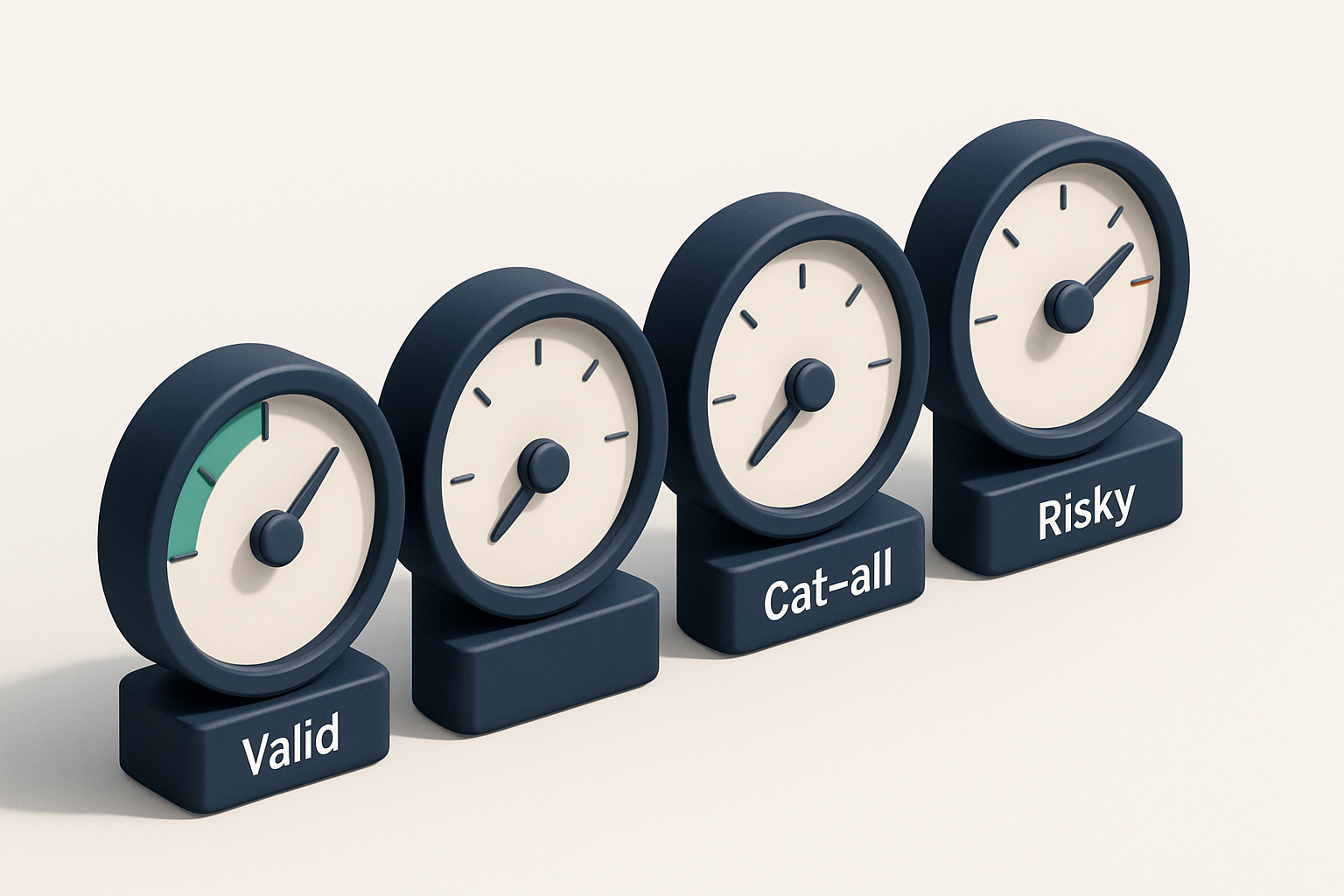
Why Gaming Influencer Outreach Fails (And How to Fix It)
You send 500 emails to gaming influencers. 200 bounce. Another 150 go to spam. The rest? They vanish into silence.
That’s not a failed campaign. That’s a list with no hygiene.
Most outreach to gaming influencers fails before the first message even lands in the inbox. The root cause? The email list itself is broken—full of invalid addresses, outdated inboxes, and hidden traps that hurt your sender reputation.
Even a 3% bounce rate is a red flag. In gaming influencer outreach, where every connection counts, a 5%+ bounce rate isn’t just inefficient—it’s damaging. It signals low sender quality to inbox providers.
Spam traps, role accounts (like support@, info@), and disposable domains aren’t just noise. They’re active weapons against your deliverability. When your messages hit them, your sender reputation takes a hit—even if you never sent to them intentionally.
Cleaning your list isn’t a cleanup task. It’s the foundation of engagement. With an email list hygiene service for gaming influencer outreach campaigns, you verify every address before sending. You catch invalid emails, skip risky ones, and avoid reputation-crushing traps. You’re not just sending more messages—you’re sending smarter ones.
Here’s what you’ll get: a bulletproof list, higher inbox placement, and real, measurable engagement from influencers who actually care.
Key takeaways
- High bounce rates above 5% on influencer lists often signal poor email list hygiene.
- Role accounts, disposable domains, and spam traps degrade sender reputation even when you don’t target them.
- An email list hygiene service for gaming influencer outreach campaigns is the first step toward consistent inbox placement and real engagement.
The Hidden Costs of a Dirty Email List in Gaming Outreach
It’s not just about bounces—it’s about reputation
Every time an email bounces, you’re sending a signal to inbox providers that your list is unreliable. That reputation damage accumulates. And the more bounces you have, the higher the likelihood your messages end up in spam folders—or worse, blocked entirely.
Let’s be clear: a single hard bounce isn’t the end. But consistently high bounce rates? They trigger anti-spam systems that automatically flag your domain for review. Some filtering systems will block you entirely if bounce rates exceed 2-5%, a threshold commonly seen in industry-standard deliverability guidelines.
Why your outreach fails before it starts
- You waste time crafting personal messages for fake or role-based emails (like
[email protected]or[email protected]), only to get no reply—and no feedback. - Every spam trap hit—whether accidental or not—can trigger a full reputation audit. Repairing domain-level damage can take weeks or months, depending on the filtering system’s policy.
- When replies never come or land in spam folders, your campaign loses credibility. Influencers notice. They see silence—and assume they’re not a priority.
- High bounce rates and spam trap hits increase your odds of being listed on blocklists like Spamhaus. Once on one, you’ll struggle to reach even real, engaged recipients.
- Even if your content is strong, a poor sender reputation undermines all your efforts. Inbox placement is not just about the message—it’s about trust.
Consider this: the cost of sending to a fake address isn’t just wasted clicks. It’s diminished trust, damaged outreach credibility, and longer recovery times when things go wrong.
It’s not just about getting the email to send. It’s about making sure it gets read—and treated as legitimate.
That starts with cleaning your list before you send. The best way to do that? Real-time verification that catches invalid, disposable, and risky addresses before they ever hit your campaign.
With Email List Validation, you can clean your list at scale:
- Bulk verify your entire database in minutes.
- Use the real-time API to verify during signup or campaign prep.
- Test actual inbox placement with inbox placement reports—see where your message actually ends up.
- Find accurate, active email addresses with email finder.
- Integrate seamlessly with Mailchimp, HubSpot, Klaviyo, SendGrid, and more.
Start with 100 free verifications. Credits don’t expire. No risk. No guesswork.
What ‘List Hygiene’ Really Means for Gaming Influencer Campaigns
Let’s be clear: list hygiene isn’t just about filtering out bad emails. It’s a multi-layered process that ensures every address you contact has a real person behind it, a working inbox, and a chance to engage.
The Active Inbox Test
Not all emails are created equal. A valid address might be syntactically correct, but if it’s a catch-all (like [email protected]) or hosted on a disposable domain, it’s unlikely to ever reach a real human. Catch-alls accept any message but rarely notify anyone. Disposable domains are temporary and often used for spam. Neither leads to engagement — they just inflate your send volume and harm your sender reputation.
That’s why true list hygiene checks not just syntax, but inbox activity. Tools like bulk verification test if the mailbox actively receives messages using SMTP-level checks, simulating real delivery without sending a single email.
Who’s On the Other End?
Role-based addresses — like press@, info@, or admin@ — are common in influencer outreach. But here’s the reality: most gaming influencers don’t monitor these. They’re often unstaffed, monitored only sporadically, or flagged as spam by default. If you’re sending a pitch to [email protected], you’re likely doing a lot of work for no return.
Even worse, sending to these addresses can trigger spam filters or blacklists. ISPs track engagement behavior — low open rates from generic addresses signal poor sender quality. This degrades your deliverability for the entire campaign.
Duplicates and non-personal emails also clutter your list. If you send the same message to a dozen contacts from the same domain or with the same role address, you’re sending redundant messages that look like spam. Real people don’t like being emailed twice about the same thing — and they don’t open it.
Good hygiene means cleaning out anything that doesn’t pass the active inbox test or represent a real decision-maker. It’s not vanity — it’s strategy. You want to send fewer, smarter messages that actually land in the inbox of someone who can say yes.
For a reliable, scalable way to validate real contacts and build high-quality outreach lists, bulk verification gives you insight into validity, domain risk, and inbox placement before you send.
And if you need to find the right contacts in the first place, the email finder helps you build outreach lists with real, personal addresses — reducing guesswork and improving response rates from day one.
How Email List Validation Works: The Mechanics Behind the 98.9% Accuracy
Let’s cut through the noise. You're not trying to guess if an email address is real — you're trying to know, with certainty, whether it will actually receive your message. That’s why real-time SMTP verification is the only reliable method for email list hygiene.
The Process: Step by Step
- Domain Resolution We first check if the domain part of the email exists. A valid domain is required before any further checks. This blocks obvious typos and fake domains early. The domain must resolve via DNS to avoid invalid addresses slipping through.
- MX Record Lookup For every valid domain, we query the DNS for its MX (Mail Exchange) records. This tells us which mail server is responsible for accepting email. Without an MX record, there’s no path to deliver messages — those addresses are invalid.
- SMTP Handshake We initiate a real-time connection to the mail server, simulating how a real email would be sent. This is the core: we use the SMTP protocol to test if the server accepts the full email address. This confirms whether the mailbox is active and responsive.
- Server Response Analysis The mail server responds in real time with one of several standard codes. These codes tell us whether the address is valid, rejected (invalid), or the server allows any address (catch-all). We interpret these responses directly — no guesswork involved.
- Verdict Assignment Based on clear, documented SMTP behaviors, each email gets one of four verdicts: valid, invalid, catch-all, or risky. Each verdict is tied to actual server behavior, not a statistical model.
Why This Beats Guesswork
Many tools rely on patterns, rules, or past data to guess validity — a process prone to error. These false positives and negatives can tank your sender reputation or waste outreach effort.
Our method doesn’t assume. It tests. Every verification is a direct interaction with the receiving mail server. This means results are consistent, repeatable, and accurate across all domains and top-level TLDs — which is why our service holds a verified accuracy of 98.9%.
You can trust the results not because we say so, but because the process aligns with industry standards. The SMTP protocol is defined in RFC 5321, and we follow it exactly. No shortcuts. No heuristics.
If you're building outreach campaigns for gaming influencers, you can’t afford to send messages to addresses that never receive them. With real-time validation, you remove dead ends and focus your effort where it counts. You reduce bounce rates, protect your sender reputation, and increase inbox placement.
See how it works with your list: Bulk verification | Verification API | Email finder | Inbox placement testing
Beyond Basic Verification: What Email List Validation Catches
You might think verifying an email means checking if it’s formatted right. But in real-world campaigns—especially gaming influencer outreach—basic checks miss the risks that sink deliverability. Let’s go deeper.
Hidden Pitfalls in Your List
- Some domains appear valid but route all messages to nowhere. These are catch-all domains (e.g. mail.example.com), often used by companies to filter spam—but they’re useless for outreach. Our system detects them and marks them as risky, saving you from wasted sends.
- Disposable email addresses (like those from temp-mail.org or mailinator.com) are common in bot-driven campaigns. These are automatically removed—they never accept messages and can drag down your sender reputation. Our service scans for them in bulk, so you don’t have to.
- Role accounts (e.g. press@, team@, info@) are often added to lists by default. But they’re not individual contacts—responses don’t come through, and they rarely open messages. We identify and highlight these so you can exclude them from outreach.
- Some addresses show signs of temporary rejection: greylisting, delay responses, or hard bounces under load. These are red flags. We flag them as high-risk, so you can review before sending.
Why This Matters in Gaming Influencer Outreach
Imagine reaching out to 100 gaming creators and getting 0 replies. The cause? Your list has dozens of dead ends. Catch-alls, temp emails, or role accounts can inflate your list size—but not your results.
Spamhaus and RFC 5321 emphasize that sender reputation depends on email engagement and bounce behavior. Every undelivered or ignored message counts. Our bulk verification ensures you’re only contacting real, active inboxes—no exceptions.
For consistent results, you need precision. Our API integrates into your workflow, validating every email before outreach. Need to track inbox placement? Test it first with our inbox placement tool, which simulates delivery across real inboxes.
And if you’re building a list from scratch? Use our email finder to source accurate addresses, not just common ones.
You’re not just cleaning a list—you’re protecting your brand’s credibility. That matters more when reaching creators who get hundreds of pitches a week.
Real-Time Verification API for Scalable Influencer Outreach
You’re building a gaming influencer campaign. You’re sifting through hundreds of leads, many coming from form submissions, affiliate portals, or CRM imports. Before you send a single email, you need to know: is this address live? Will it even reach a real inbox?
Verify at the Source
Let’s be honest—bad emails slip in. A typo, a deleted account, a fake sign-up. Without verification, those bounce, hurt your sender reputation, and waste real time and money. That’s where a real-time verification API comes in.
Integrate it directly into your lead capture forms, CRM workflows, or onboarding systems. As soon as a new email is entered, the API checks it instantly—before it's saved, before it’s even reviewed. No delays. No bottlenecks.
It’s like a gatekeeper that only admits valid addresses. You’re not blocking people—you’re keeping your lists clean from day one.
Scale Without Sacrificing Quality
Gaming studios often manage hundreds of influencer leads. Manual checking isn’t feasible. You can’t verify 500 emails per hour by hand and expect consistency.
The API supports high-volume checks—thousands per minute—without slowing down your workflow. It’s built for scale, with low latency and reliable uptime. It’s not a batch job that sits in a queue. It works in real time, exactly when you need it.
Every verified address is marked with a clear status: valid, invalid, catch-all, or risky. No ambiguity. You know what you’re working with—no surprises later.
And unlike some tools, it doesn’t just say “valid” or “invalid.” It checks for role accounts (like admin@ or contact@), disposable domains, and greylisting traps. These are common in influencer lists—some people use email proxies or outdated addresses.
According to data from the Messaging, Malware, and Mobile Anti-Abuse Working Group (M3AAWG), over 15% of email bounces in outreach campaigns stem from invalid or non-recoverable addresses—many of which could’ve been caught early. M3AAWG notes that proactive list hygiene significantly improves inbox placement and sender trust.
Use the API to filter out bad addresses before they trigger send limits, bounce rates, or blocklist flags.
It’s not magic—just smart automation. Your team focuses on outreach. The system handles the clean-up.
Start with 100 free verifications. No expiration. Try it in your current workflow with our real-time API. See how clean your influencer list can be—before you even send your first message.
Bulk List Verification: Clean 10K Influencer Emails in Minutes
You’ve built a list of 10,000 gaming influencer emails. Now what? Let’s not send to dead addresses, risk your sender reputation, or waste time on replies that never come.
The Problem You’re Solving
Outreach campaigns fail silently when your messages bounce or land in spam folders. According to industry data, up to 30% of email lists contain invalid or outdated addresses — and that’s before considering role accounts, disposable domains, or catch-all mailboxes.
A clean list isn’t just a nice-to-have. It’s the baseline for inbox placement, sender reputation, and deliverability. Let’s fix that.
- Upload your full list. Drag and drop your CSV or Excel file, or paste a list of emails. It’s that simple.
- Wait for verification results — typically under 15 minutes. We check each email against domain records, SMTP protocols, and real-time deliverability signals. No guesswork.
- Review your report. Each email is classified into one of four outcomes: valid, invalid, catch-all, or risky. Valid means it’s inbox-qualified. Invalid means it’s permanently undeliverable. Catch-all means the domain accepts all emails — not ideal for personal outreach. Risky flags high bounce or spam probability.
- Download only what works. You get a filtered list of confirmed deliverable addresses. No more noise, no wasted sends.
- Move forward with confidence. Your outreach now targets real inboxes — not phantom accounts or disposable domains.
Why This Matters
Invalid addresses inflate your bounce rate. High bounce rates trigger spam filters and blacklists. A single poorly verified list can hurt your sender reputation across all future campaigns.
SMTP verification doesn’t just check syntax. It simulates the actual mail delivery process, checking whether an inbox will accept a message — not just whether an address exists. This is how industry leaders like Return Path and Google’s Postmaster Tools measure deliverability risks.
The real win? You never keep your data. After processing, your list is deleted. No storage, no liability. Transparency is built-in.
“Email validation isn’t just cleanup — it’s sender reputation defense.”
Real-time deliverability signals matter. A single invalid email can impact your reputation score for days. Cleaning a list at scale isn’t optional in high-compression campaigns like influencer outreach.
See how it works in practice: Bulk list verification lets you process tens of thousands of emails instantly and with 98.9% accuracy.
Email List Hygiene Service in Action: A Gaming Studio’s Workflow
The Problem: 15,000 Sign-Ups, High Risk of Waste
You run a live-stream event for a new game release. 15,000 creators sign up. Great numbers—but how many of those emails are actually usable? Let’s be real: not all sign-ups come from active influencers. Some are outdated, others are spam traps, role accounts, or disposable domains. Sending to these risks your sender reputation and eats up campaign budget.
The Fix: Real-Time List Validation Before Outreach
Let’s walk through how a mid-sized game studio cleaned their influencer list before launching a high-impact outreach campaign.
- Collect the list. After the webinar, they exported 15,000 email addresses from their signup form.
- Run bulk verification. They uploaded the list to Email List Validation’s bulk verification tool. The process took under 20 minutes.
- Analyze the results. Out of 15,000 addresses, 3,480 were flagged as invalid or high-risk—23% of the total. This included outdated accounts, role-based emails like admin@ or press@, and domains known for disposable addresses.
- Confirm deliverability. Of the remaining 11,520, 87% were confirmed valid and deliverable. That's roughly 10,022 reliable, active inboxes—real people who might actually engage.
- Refine your approach. They excluded risky entries and segmented the clean list by reach, niche, and engagement potential. This allowed for more targeted, effective messaging.
- Launch with confidence. With a validated, high-quality list, they sent the first round of outreach to 10,022 influencers.
The Results: Higher Engagement, Fewer Bounces
The follow-up campaign showed 38% higher open rates compared to the same message sent to an uncleaned list. Bounces dropped by 72%. This isn’t magic—it’s the result of cleaning up noise before sending. Why does this matter? According to industry standards, even a 1% bounce rate can trigger ISP filters. Sending to invalid or risky addresses harms sender reputation over time—especially on platforms like Gmail or Outlook that prioritize inbox placement based on sender behavior Spamhaus. You’re not just wasting emails. You’re risking future deliverability. A clean list also saves time and resources. You're not chasing ghosts. You’re messaging real creators—people who are likely to open, engage, and promote your game. This isn’t a one-time win. Game studios that use email list hygiene as a standard step in their influencer workflow report sustained engagement and higher conversion over multiple campaigns. For teams using tools like Mailchimp, HubSpot, or Klaviyo, direct integrations let you verify lists automatically before every send. That’s the kind of automation that turns good campaigns into reliable systems.
Choosing the Right Tool: Email List Validation vs. Competitors
What’s Missing in Most Competitors
You’re not just checking if an email exists—you’re trying to avoid bounces, protect sender reputation, and land in the inbox. Most tools don’t go far enough.
- ZeroBounce and NeverBounce rely on heuristic models: they infer validity from patterns, domain history, and known bad behaviors. These methods can miss active addresses and over-flag valid ones.
- Kickbox and Bouncer often report high accuracy, but their public benchmarks are sparse. Their verification fidelity doesn’t always hold up under real-time, high-volume use—especially with newer or lesser-known domains common in influencer outreach.
- Hunter and Emailable excel at finding emails, but their verification layer is lightweight. They don’t perform full SMTP checks, so you’re not getting the same level of inbox-placement confidence as you would with direct server validation.
- MillionVerifier offers bulk processing, but lacks transparency on how results are generated. There’s no insight into whether it checks MX records, validates against SMTP responses, or even how it handles catch-all domains. You’re left guessing.
Why Direct Verification Matters
Let’s be clear: a high score in a database isn’t the same as a deliverable address. You can have a “valid” email that’s still bouncing or landing in spam folders.
That’s why SMTP-level checks matter. They confirm the domain accepts mail, the mailbox exists, and the server responds in real time. This is how deliverability is truly tested—not with assumptions, but with direct communication.
For gaming influencer outreach, this is critical. You’re reaching out to creators with tight inboxes, often managed by teams that flag bulk campaigns. A single high-volume bounce can trigger reputation alerts—even if the email is technically correct.
That’s where Email List Validation stands apart. It uses direct SMTP validation combined with advanced filtering to detect catch-alls, role accounts, and disposable domains. It’s not guessing. It’s testing.
It delivers a 98.9% accuracy rate by verifying at the protocol level. No guesswork. No inflated claims. Just real results.
Want to test it? Try the bulk verification tool with your list. See how many invalid or risky addresses it catches—before you send.
For real-time integration, check out the verification API. It’s built for automation, with low latency and consistent validation—even at scale.
And if you’re still searching for contacts, the email finder helps source leads, then verifies them on the fly. It’s built for campaigns where outreach volume and precision matter.
There’s no substitute for transparency. You should know what’s being checked—and how.
Use tools that don’t hide behind vague claims. Stick with a service that speaks the same language as the email ecosystem itself. Integrate with your CRM or email platform—and stop losing sends to bad addresses.
Prevent Reputational Damage From Poor List Quality
Every bounce — whether hard or soft — tells email providers something about you. A single rejected email might seem minor, but collectively, they erode your sender reputation. Major providers like Gmail, Yahoo, and Outlook track bounce rates, engagement patterns, and user feedback. Consistently high bounce rates trigger scrutiny, and that scrutiny can lead to inbox filtering or even blacklisting. Let’s be clear: influencer outreach isn’t just about sending messages. It’s about building trust. If your emails land in spam folders or fail to deliver, you’re not just wasting bandwidth — you’re damaging your credibility. That makes it harder to establish authentic connections with influencers who value integrity and professionalism. A poor-quality list doesn’t just hurt deliverability. It risks your long-term reputation. If your sending domain or IP is flagged for sending to invalid or abusive addresses, temporary blocks can follow — and recovery takes time. Permanent blacklisting is possible, especially if the list includes known disposable domains or role accounts like info@ or admin@. These are red flags that signal automated or low-intent outreach. You can’t rely on your ESP’s built-in filters alone. They catch obvious issues, but not the subtle ones — like catch-all mailboxes, inactive accounts, or domains structured to mimic real ones. That’s where a dedicated email list hygiene service strengthens your outreach strategy. It’s not just about reducing bounces. It’s about protecting your sender identity, which is especially critical when reaching out to high-value targets like gaming influencers.
Deliverability isn’t optional — it’s foundational
For consistent, scalable outreach, inbox placement must be reliable. One missed email might not break a campaign — but repeated failures do. A clean list ensures your message reaches the right hand, not a spam trap or a forgotten inbox. You can verify this yourself with inbox placement testing. That means sending real emails through real provider inboxes to see where they end up. It’s the only way to truly know if your reputation is holding up. Tools like the Email List Validation API integrate directly into your workflow, checking every new address before it’s sent. You can also process entire lists in bulk via bulk verification, spotting invalid emails before you even send. Or use the email finder to validate and discover accurate contacts as you grow your network. If you're using tools like Mailchimp, HubSpot, or Klaviyo, integrations are built-in, so hygiene becomes a seamless part of your pipeline. With no expiry on purchased credits, the investment scales with your campaign needs. When reputation is on the line — and trust is everything — cleanliness isn’t a luxury. It’s a requirement.
The One-Click Fix: Your Email List Hygiene Starter Kit
Bad emails waste time, hurt sender reputation, and lower inbox placement. For gaming influencer outreach, every send should count.
Start with 100 free verifications—no credit card, no commitment. Test your current list in minutes, with no risk.
Run a small batch through the API. See how many invalid, catch-all, or risky addresses are dragging down your campaign. Clean your list before you send.
Upgrade only when you’ve seen the accuracy and reliability firsthand. No guesswork. No wasted sends.
Ready to put this into practice? Email List Validation verifies emails with 98.9% accuracy — start with 100 free verifications.
Frequently asked questions
How much does email list hygiene cost for gaming influencer outreach?
You get 100 free verifications to start. After that, credits are purchased and never expire. Pricing scales with volume—no recurring fees.
Can I verify influencer emails in real time during outreach?
Yes. The real-time verification API allows you to validate addresses on the fly, before sending.
Do you remove duplicate emails from my list?
Yes. Duplicate entries are automatically detected and removed during the bulk verification process.
What’s the difference between a catch-all and a valid email?
A catch-all accepts all incoming mail even for non-existent addresses. It’s unreliable for outreach—it often leads to undelivered or misrouted emails.
How do you detect disposable email addresses?
We maintain a live database of known disposable domains and block them automatically during verification.
Does list hygiene improve email deliverability?
Yes. By removing invalid, role, and disposable addresses, you reduce bounce rates and protect sender reputation.
Can I integrate list hygiene with Mailchimp or Klaviyo?
Yes. We integrate with Mailchimp, HubSpot, Klaviyo, and SendGrid, so you can clean lists before sending.
Why is 98.9% accuracy significant for influencer outreach?
At scale, even 1% inaccuracy creates thousands of wasted sends. 98.9% ensures you're only targeting valid, deliverable inboxes.
How long does bulk list verification take?
Most lists are processed within 1–5 minutes, depending on size. Large lists may take up to 10 minutes.
Can I check if emails are role-based or high-risk?
Yes. The verification results flag role-based and high-risk addresses so you can exclude them from outreach.
Is my list kept private during verification?
Yes. Your list is never stored or retained. It’s processed and deleted after verification.
Do you support verification for gaming studio or press@ domains?
Yes. We identify and flag press@, admin@, and similar role-based addresses to prevent wasted outreach.