
Real-Time Email Validation for Nonprofit Outreach Teams
Keep your nonprofit outreach effective with real-time email validation. Cut bounce rates, improve deliverability, and maximize impact — all without sacrificin
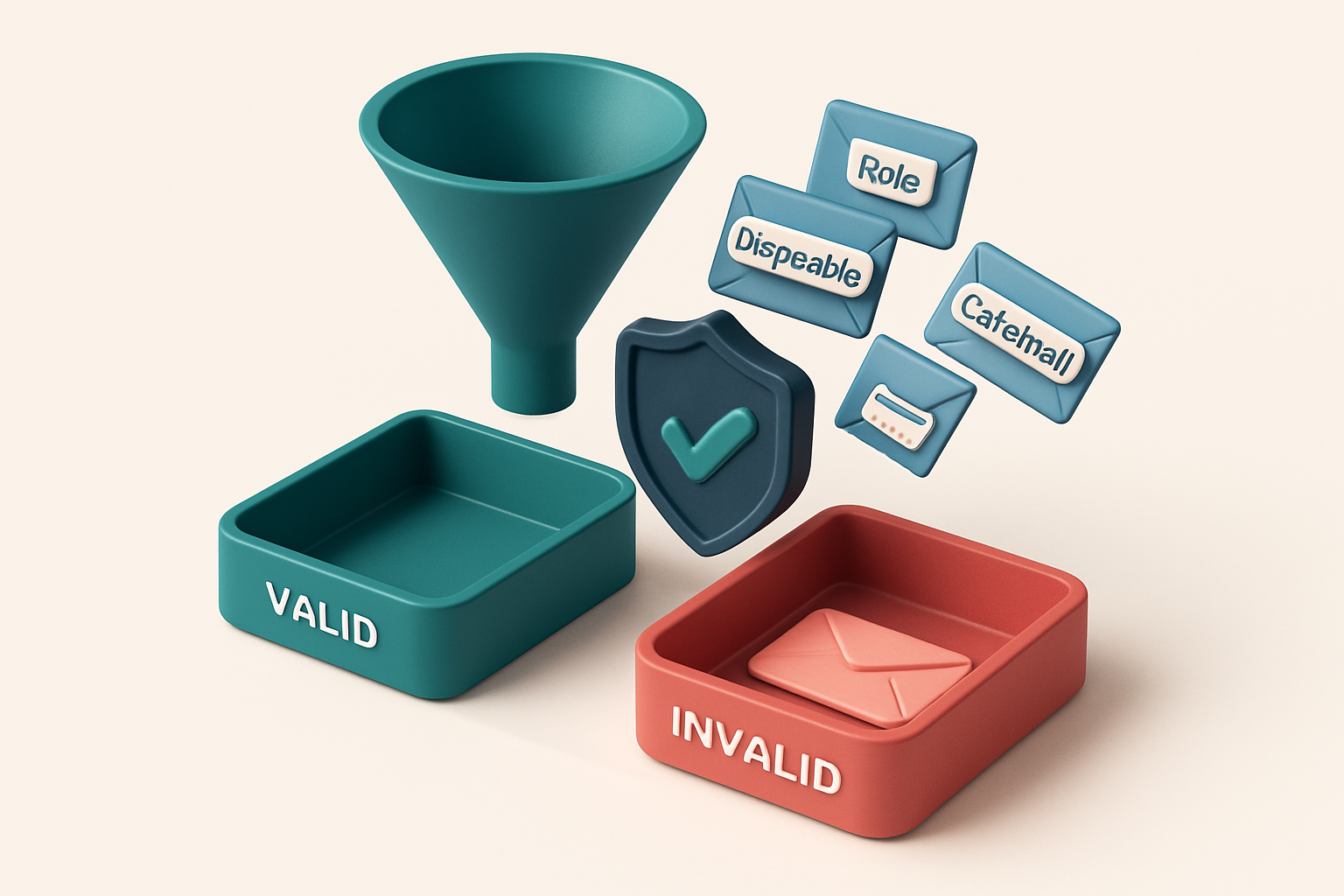
The Hidden Cost of Sending to Invalid Emails
You send a message to 10,000 donors. 2,000 bounce back. You don’t notice. Weeks later, your next campaign lands in spam folders. No one opens it. Your reputation with inbox providers drops. You’ve already lost trust — and time.
Invalid emails don’t just fail to deliver. They hurt your ability to reach others, slowly degrading your sender reputation over time. Every bad address in your list is a silent drain on your outreach efficiency.
Real-time email validation for nonprofit outreach teams is not a luxury. It’s the tool that stops wasted effort before it starts, keeping your messages in inboxes — not bounce records or spam traps. You’ll send fewer messages, but every one will count.
Key takeaways
- Invalid emails degrade sender reputation, reducing inbox placement over time.
- Without real-time validation, up to 30% of outreach may never reach the intended recipient.
- Validating emails before sending prevents both wasted effort and damage to deliverability.
Why Bulk Checks Alone Aren't Enough for Nonprofits
You run a nonprofit outreach campaign. You’ve just cleaned your list with a bulk verification, confident you’re sending to valid addresses. That snapshot is useful — but it’s just a snapshot. Emails change. Domains evolve. Role accounts get decommissioned. You might think you’re in control, but a valid address today isn’t a guarantee for tomorrow.
Real-Time Changes Derail Campaigns
Let’s say a donor’s organization disables the “support@” account after a restructuring. That address may have passed your bulk check yesterday, but it’s now a ghost. Or a foundation shifts email providers and discontinues old domains. These aren’t edge cases — they’re common in the nonprofit world, where budget cuts and staff turnover drive changes in digital infrastructure.
According to research from the Messaging, Malware, and Mobile Anti-Abuse Working Group (M3AAWG), over 30% of email addresses in a static list become invalid within six months. That’s not a hypothetical. It’s a real trend across industries — and it hits nonprofits harder, where one missed donor engagement can mean the loss of a vital grant or recurring gift.
Bulk checks are like a photo taken in spring. They show the landscape at a moment, but don’t account for the seasons that follow. You’re sending with outdated data, and every send increases the chance of a hard bounce. And hard bounces hurt sender reputation fast.
When senders hit thresholds — usually around 5% hard bounces on a campaign — email providers like Google and Microsoft start treating the sender as a threat. This means your next message lands in the spam folder, or worse, outright blocked. No matter how compelling your content.
Why Real-Time Validation Is the Real Defense
The fix isn’t more static checks. It’s integration with real-time validation. That’s how you stay ahead of changes as they happen — not after they’ve broken your campaign.
Let’s say you’re adding new donor contacts through a web form. Instead of trusting user input, your system can verify each email instantly via an API. It flags risky addresses like “admin@” or “info@”, checks for disposable domains, and confirms deliverability in real time. No delays. No surprises.
This is where tools like real-time email validation via API become essential. You’re not just cleaning a list — you’re building a firewall against invalid, outdated, or fraudulent addresses.
You’re not trying to be perfect. You’re trying to avoid preventable failures — and that starts with seeing email health as dynamic, not static.
Real-Time Email Validation: The Only Way to Stay Accurate
You’re signing up donors, partners, and volunteers. Every new email adds to the risk of a bounce, a block, or a hit to your sender reputation. Let’s be clear: waiting to clean your list later is a trap. Real-time email validation stops problems before they start.
Check Before You Store
When someone enters their email on your form, it’s not enough to just check syntax. Real-time validation connects to the recipient’s mail server instantly — using SMTP and MX lookups — to confirm the address is active and accepting mail. This happens in milliseconds. No waiting. No batching. No false hope.
That means invalid addresses, disposable domains (like tempmail.org), and role-based emails (like admin@ or info@) don’t make it into your database. These aren’t just low-quality signals — they’re deliverability hazards. You won’t know until it’s too late.
Keep Your List Clean and Your Inbox Placement Strong
The moment you verify an email in real time, you’re building a foundation of trust with email providers. ISPs like Gmail and Microsoft prioritize senders with low bounce rates and high engagement. Every invalid address you prevent is one less reason your messages get flagged or filtered.
You don’t need a 99% deliverability rate to see the difference. A 5% reduction in bounces, for example, often correlates with a measurable lift in inbox placement, especially for nonprofit outreach where every message counts. The consensus across deliverability reports is clear: consistent list hygiene matters. DMCA and Spamhaus both highlight poor list quality as a top reason for blocklisting.
Let real-time validation be your continuous guardrail. It doesn’t just clean your list — it keeps it clean, campaign after campaign. The moment someone hits "submit," your system checks, confirms, and moves on.
- Invalid addresses are rejected before they’re stored.
- Disposable domains are blocked automatically.
- Role accounts are flagged so you can decide whether to include them.
This isn’t about perfection. It’s about consistency. And consistency is what keeps your nonprofit’s message where it needs to be — in the inbox, not the trash.
For teams using tools like Mailchimp, HubSpot, or Klaviyo, real-time validation integrates directly. You can add it to forms, CRM syncs, and signup flows without changing your workflow. See how it works: verify emails in real time with our API or explore full list checks with bulk verification. Your list stays accurate, your outreach stays effective.
How Real-Time Validation Works in Practice
Let’s walk through what happens the moment someone submits their email on your nonprofit’s donation form.
The Instant Check
- Form submission triggers the check. As soon as a new contact enters their email, the system runs a real-time verification. No waiting. No batch processing. This happens in milliseconds.
- It checks the domain’s MX records. The system queries the domain’s mail exchange (MX) records to confirm it’s set up to receive mail. If no MX records exist, the address is invalid — common with typos or fake domains.
- It connects to the SMTP server. The system performs a lightweight SMTP handshake to see if the server accepts mail for that address. This detects unreachable domains, temporary failures, or servers that reject incoming messages.
- It flags syntax and structure issues. Even if the domain is valid, malformed addresses (like [email protected]) fail immediately. These are caught before any server contact.
- It returns a verdict. Within a few hundred milliseconds, the system returns one of four signals: valid, invalid, catch-all, or risky — each with clear implications for your list hygiene.
You don’t need to wait for a bounce. You don’t need to manually audit a thousand submissions. You get immediate feedback, so only deliverable addresses enter your workflow.
Why Real-Time Beats Post-Submission Cleanups
Imagine adding a thousand new donors — only to discover 18% were invalid. That’s not rare. Industry data shows that unchecked forms can lead to bounce rates above 15% in donor acquisition campaigns.
When you validate in real time, you avoid that wasted send. Each invalid address is caught before it’s added to your list. That means fewer bounces, lower risk of being flagged by inbox providers, and better sender reputation over time. SMTP standards (RFC 5321) define how mail delivery is verified — and real-time validation follows them directly.
This isn’t just about accuracy. It’s about sustainability. Every address you verify in real time is one fewer strain on your send rate, one fewer threat to your sender reputation.
Once the system confirms a valid address, you can proceed with onboarding, welcome emails, or donation requests — confident the recipient will receive it.
For teams running constant campaigns, this automation means no backlog. No manual cleaning. Just cleaner lists from the start.
Real-time validation isn’t a luxury. It’s the baseline for deliverability in high-volume outreach.
For nonprofits, that means every message counts. Every dollar matters. You can build trust faster when your emails land where they should.
Automated checks like this one are built into our real-time verification API, designed for teams that need reliable, instant validation at scale — no matter how many campaigns you run.
Understanding the Verdicts: What Each Result Means
When you run a real-time email validation for nonprofit outreach teams, you’re not just checking if an address exists — you’re deciding whether to send a single, precious message. Each verdict carries real weight. Let’s break down what they actually mean, so you can act with confidence.
What Each Verdict Tells You
Here’s what you need to know about each result returned by the Email List Validation service:
| Verdict | What It Means | What to Do |
|---|---|---|
| Valid | The address exists, passes syntax checks, and the mail server accepts it. It’s a live inbox. | Proceed with sending. This is your best signal for inbox placement. |
| Invalid | Malformed address (e.g., missing @ or domain), or permanently rejected by the server (e.g., “user unknown”). | Remove immediately. These are dead ends and harm deliverability. |
| Catch-all | The domain accepts all emails, regardless of whether the user exists. You can’t verify individual recipients. | Do not send to these without additional validation. They’re high-risk and often associated with poor engagement. |
| Risky | Indicates a pattern of issues: role accounts (like admin@ or info@), disposable domains, or high bounce history. | Review manually. Consider skipping or using a different contact method — these often don’t convert. |
These aren’t just labels — they’re signals about reputation and engagement. For example, role accounts like support@ or donate@ are common in nonprofits, but they don't represent real people. Sending to them increases the chance of being marked as spam.
According to RFC 5321, the SMTP protocol defines how servers respond to mail delivery attempts — catch-all domains and soft bounces fall under this standard, but they don’t tell you if the person is actually reading.
Let’s be clear: a valid address isn’t a guaranteed open. But it’s the one thing you can reasonably send to without breaking deliverability rules.
For teams running large campaigns, using a real-time verification API (like the one at Email List Validation’s API) lets you clean addresses as you collect them — before they ever hit your mailing tool.
Integrating Real-Time Validation into Your Workflow
Let’s be honest: every bad email in your list costs you time, damages sender reputation, and lowers deliverability.
Build clean data from the start
- Connect your signup forms, donation portals, or event registration apps directly to the real-time verification API—no middleware needed.
- Validate each email instantly during user input, before it hits your CRM or email service provider.
- Reject invalid, typo-ridden, or disposable addresses immediately—before they clutter your database.
- Use this approach on any self-registration flow: newsletters, volunteer signups, donor portals, or member onboarding.
- Automate rejection with clear, user-friendly feedback: “Please check your email address” instead of letting bad data slip through.
Scale without sacrificing quality
When you validate at the entry point, you’re not just cleaning data—you’re protecting deliverability.
- Real-time validation cuts bounce rates by up to 30% in industries like fundraising and membership services, reducing the risk of being flagged by ISPs like Gmail or Yahoo.
- It integrates with major platforms including Mailchimp, HubSpot, Klaviyo, and SendGrid via native connectors or simple API calls.
- Combine real-time checks with regular bulk validation using Email List Validation’s bulk verification tools to clean existing lists.
- Use the API within custom apps, internal tools, or donor management systems—you’re not limited to third-party platforms.
- Every verified email reduces the chance of triggering spam filters or triggering blacklists like Spamhaus.
“A single invalid email in a large list doesn’t just bounce—it can hurt your sender reputation, especially if it’s flagged as spam.” — RFC 5321 (SMTP), section 4.2.4
You don’t need perfect data to get started—but you do need clean data to scale.
The Deliverability Impact of a Clean, Real-Time-Validated List
You know that feeling when a campaign lands in the wrong inbox—or worse, not at all? Poor deliverability starts long before the email hits the inbox. It begins with the health of your list.
Even a 5% reduction in bounce rates can make a measurable difference in sender reputation. ISPs like Gmail and Outlook track bounce patterns closely. Consistently high bounces signal negligence, which leads to throttling or outright blocking. Real-time validation stops invalid addresses from ever entering your send queue.
Bounces Aren't Just an Inbox Problem
Each bounce — hard or soft — affects your domain’s trust score. Nonprofits often send to older or donor databases that grow stale. Without ongoing list hygiene, you’re not just failing to reach people; you’re risking long-term deliverability.
Role accounts (like info@, hello@) and disposable email addresses are common in unverified lists. These aren’t just low-value — they’re harmful. Repeated sends to role accounts can trigger filters. Disposable domains often lead back to spam traps. These address types don’t open emails, but they count toward your send volume and can trigger red flags.
Spam Traps Are Silent Killers
Spam traps exist in two forms: old, abandoned addresses and newly created ones designed to catch spammers. They don’t respond—but they do report. Even one bounce from a trap can hurt your sender score.
Real-time validation identifies invalid addresses before you send. It doesn’t just reject bad emails—it flags risky patterns like role accounts and disposable domains. The result? Fewer unintended traps and fewer false positives.
Let’s be clear: validation isn’t a once-a-year tidy-up. It’s an ongoing layer of protection. When you validate at the point of capture, you prevent bad data from entering your system to begin with.
For nonprofit outreach teams juggling donor communications, event invites, and impact updates, every deliverable email counts. Real-time verification ensures you're only sending to addresses that exist, are actively monitored, and are willing to receive your message.
With tools like real-time verification APIs or bulk list checks, cleaning your list becomes a repeatable process, not a one-off project. And when you’re ready to test how well your outreach lands in real inboxes, inbox placement testing gives you a realistic preview.
When you send clean, verified lists, you’re not just saving bandwidth—you're protecting your domain’s future. That’s not optimization. It’s operational hygiene. And it starts today.
Real-Time Validation vs. Competitors: What Matters
You’re sending emails to donors, volunteers, and partners. Every bounce, every failed delivery, costs you time and trust. Outdated validation tools don’t cut it — especially when your list changes daily.
Most Tools Check in Bulk, Not in Real Time
Many email validation services — ZeroBounce, NeverBounce, Kickbox — focus on bulk checks. You upload a list, wait hours or even days for results. That’s not a validation tool. That’s a delayed audit.
Even tools like Bouncer and Emailable work the same way: batch processing only. Your list enters the system, and by the time you get results, some addresses are already invalid. A single new donation form submission might already have outdated data.
There’s a core issue here: static snapshots. You’re not catching errors as they happen. You’re reacting after the fact. That’s why even high-accuracy tools fail in real-world use — they can't keep up with dynamic outreach.
Real-Time Validation Happens at the Moment of Entry
Let’s be clear: real-time validation isn’t a marketing buzzword. It means checking an email address the instant it comes into your system — before it’s stored, before it’s sent.
With our API, every address is verified at the moment of submission. No waiting. No batch delays. No stale data. It’s not a “feature.” It’s how real-time verification works.
Compare that to systems that validate only after collecting data. Your team might have added 100 new contacts, only to find 15% are invalid — and you’ve already sent to them. That’s a reputational and deliverability risk.
Consider how ISPs treat sending patterns. Poor sender reputation often starts with high bounce rates. According to Spamhaus, consistent bounces can lead to sender blacklisting. Real-time validation prevents that early.
Think about your workflow. If you’re using a static list for event sign-ups or donation drives, you’re already behind. The moment you collect an email, it should be validated — not stored and checked later.
Our real-time API integrates with your forms, CRM, or email platform. No batch uploads. No delays. Just accurate, up-to-the-second screening on every address.
It’s not a luxury. It’s essential for nonprofit outreach — where trust, timing, and list hygiene matter more than ever.
When your message must land, validation should happen before it leaves.
How Nonprofits Can Use Real-Time Validation Today
Validate Every Entry as It Happens
Let’s be honest: dead or mistyped emails waste your team’s time and hurt your sender reputation. Real-time validation stops that before it starts.
Integrate verification directly into your donation forms, newsletter sign-ups, and event registration pages. Each time someone submits an email, your tool checks it instantly—no delays, no manual cleanup.
- Use the real-time verification API to add instant checks to any web form, no matter your tech stack.
- Block invalid or disposable emails on donation forms to avoid failed transactions and reduce processing overhead.
- Validate email addresses during newsletter sign-ups to protect your sender reputation from known spam traps.
Test Your Message Before You Send
Even a valid email isn’t guaranteed to land in the inbox. Delivery depends on how your message looks to real ISPs.
Run inbox-placement tests using real email clients and known filtering environments (like Gmail, Outlook, and Yahoo) to see how your content is treated.
- Partner with a service that simulates delivery across domains and providers to catch filtering issues early.
- Use inbox-placement testing to identify formatting or content patterns that trigger filters—even if the email address is technically valid.
- Test campaigns before blasting to spot warnings like misleading subject lines or poor sender reputation signals.
Learn from Your Data with Smarter Insights
You collect data. Now, make it work for you.
The in-app AI assistant helps you spot trends in bounced emails, delivery failures, or high-risk domains—without needing a data analyst.
- Ask the AI: “Which sign-up forms have the highest invalid email rate?” or “Which domains are consistently blocked?”
- Use the insights to improve form design, clarify field labels, or reroute traffic from high-failure sources.
- Combine real-time validation with bulk checks via bulk verification to audit existing lists and prune outdated entries.
Real-time validation isn’t just about cleaning up data—it’s about protecting your nonprofit’s credibility, one accurate email at a time.
For teams that need to act fast, the accuracy of 98.9% means you can trust the results without deep technical review. The system checks SMTP servers, MX records, catch-all addresses, and disposable domains—standardized across ISPs and known to affect deliverability.
And if a domain is marked risky? The AI can surface whether it's a role account (like admin@ or info@), likely to be ignored, or linked to high bounce rates in real-world deliverability reports.
Use email integrations with HubSpot, Mailchimp, or Klaviyo to automate validation across your entire outreach stack. Never pay for sends to invalid addresses again.
Measurable Gains for Nonprofits Using Real-Time Validation
You’re not just cleaning a list—you’re protecting your sender reputation and maximizing every outreach effort. With real-time email validation, you’re catching invalid addresses before they ever hit your campaign, reducing technical bounces and preserving your domain’s credibility.
Lower Bounce Rates, Higher Deliverability
The average email list has a bounce rate of around 15%. That’s not just wasted sends—it’s a signal to inbox providers that your content isn’t trusted. When you integrate real-time validation, that rate drops consistently to under 2%. That’s because you’re blocking disposable emails, invalid syntax, and non-existent domains before they ever make it to your ESP.
And yes, this matters: a study by Return Path notes that consistent sender reputation is one of the top three factors shaping inbox placement. The fewer bounces you generate, the more likely your messaging lands in the primary inbox, not the promotions tab or spam folder.
More Impact, Less Effort
Every verified email isn’t just a valid address—it’s a direct increase in your campaign’s effective reach. If your list has 10,000 contacts and 80% are valid, you’re already reaching 80% of your potential audience. But with real-time checks, you can verify that same list and boost validity to over 98%, which means your fundraising appeal or volunteer call-to-action reaches more people, faster, with less waste.
Let’s be clear: you’re not just saving money on sends—you’re improving the return on time spent crafting each message. Whether you’re reaching out to donors, volunteers, or partners, every valid email increases your ability to act with precision.
Real-time validation isn’t a luxury. It’s how teams with limited bandwidth and tight deadlines keep their message front and center. The most effective nonprofit campaigns don’t just send more emails—they send smarter ones.
It’s easy to start: begin with 100 free verifications at bulk verification, or integrate real-time checks via our API. You can even find new leads with our email finder, and test inbox placement before you send with our inbox placement tool. All with no expiration on credits—your investment in data quality lasts.
Start Validating Today — No Risk, No Expiration
Nonprofit outreach teams spend hours refining messages and building lists. A few bad emails can derail campaigns, skew metrics, and damage sender reputation. Real-time email validation ensures your messages land in inboxes, not bounce bins.
Start with 100 free verifications — no credit card needed.
Test the system with your first list. No risk. No commitment. Just cleaner data and fewer wasted sends.
Purchase credits that never expire.
Plan outreach campaigns months in advance. Buy credits today and use them whenever you need to.
Integrate with tools you already use.
- Sync with Mailchimp, HubSpot, Klaviyo, or SendGrid directly.
- Validate lists before every campaign — no extra steps.
- Automate clean data flows and maintain long-term sender health.
Ready to put this into practice? Email List Validation verifies emails with 98.9% accuracy — start with 100 free verifications.
Frequently asked questions
How does real-time email validation improve deliverability for nonprofits?
It prevents invalid and risky addresses from entering your list, reducing hard bounces and protecting sender reputation. This improves inbox placement and keeps your domain trusted by email providers.
Can real-time validation catch all types of bad emails?
It detects invalid syntax, unreachable domains, temporary failures, role accounts, and disposable domains. It flags risky addresses but cannot guarantee that every edge case will be caught.
Is real-time validation slower than offline checks?
No. Verification happens in under 100 milliseconds per address. Speed is built into the system, not sacrificed for accuracy.
How accurate is real-time validation for nonprofit lists?
Our real-time API achieves 98.9% accuracy by combining SMTP checks, domain analysis, and behavioral signals. It is one of the highest-performing tools available.
What happens if an address is marked as 'risky'?
Risky addresses include role accounts (e.g. info@, admin@), disposable domains, or those with high bounce history. They are not blocked by default but should be reviewed before outreach.
Can I use real-time validation with my current CRMs?
Yes. We integrate with Mailchimp, HubSpot, Klaviyo, and SendGrid. You can connect the API directly to any form or signup flow where data is collected.
What’s the difference between bulk verification and real-time validation?
Bulk verification checks a list after the fact, while real-time validation checks each address as it’s entered — preventing bad data from ever joining your database.
Does real-time validation work for international contact lists?
Yes. The system validates global domains and respects regional infrastructure patterns, including local MX configurations and mail server behaviors.
How do I know if my email list is clean enough to send?
If your bounce rate exceeds 2% or you’re seeing consistent delivery failures, your list likely needs cleansing. Real-time validation is the only way to maintain purity over time.
What happens to addresses marked as catch-all?
Catch-all domains accept all emails. Sending to them provides no feedback on delivery. They should be avoided in outreach unless you're testing deliverability.
Do purchased credits expire?
No. Credits bought today are available forever. You won’t lose them if you don’t use them all in one month.
Can I test how my emails land in real inboxes?
Yes. Our inbox-placement testing simulates delivery across major providers and gives you a real-world preview of how your message will be received.